
Production
Thread rolling
Threads cold-formed instead of cut
Step 6
Threads cold-formed instead of cut
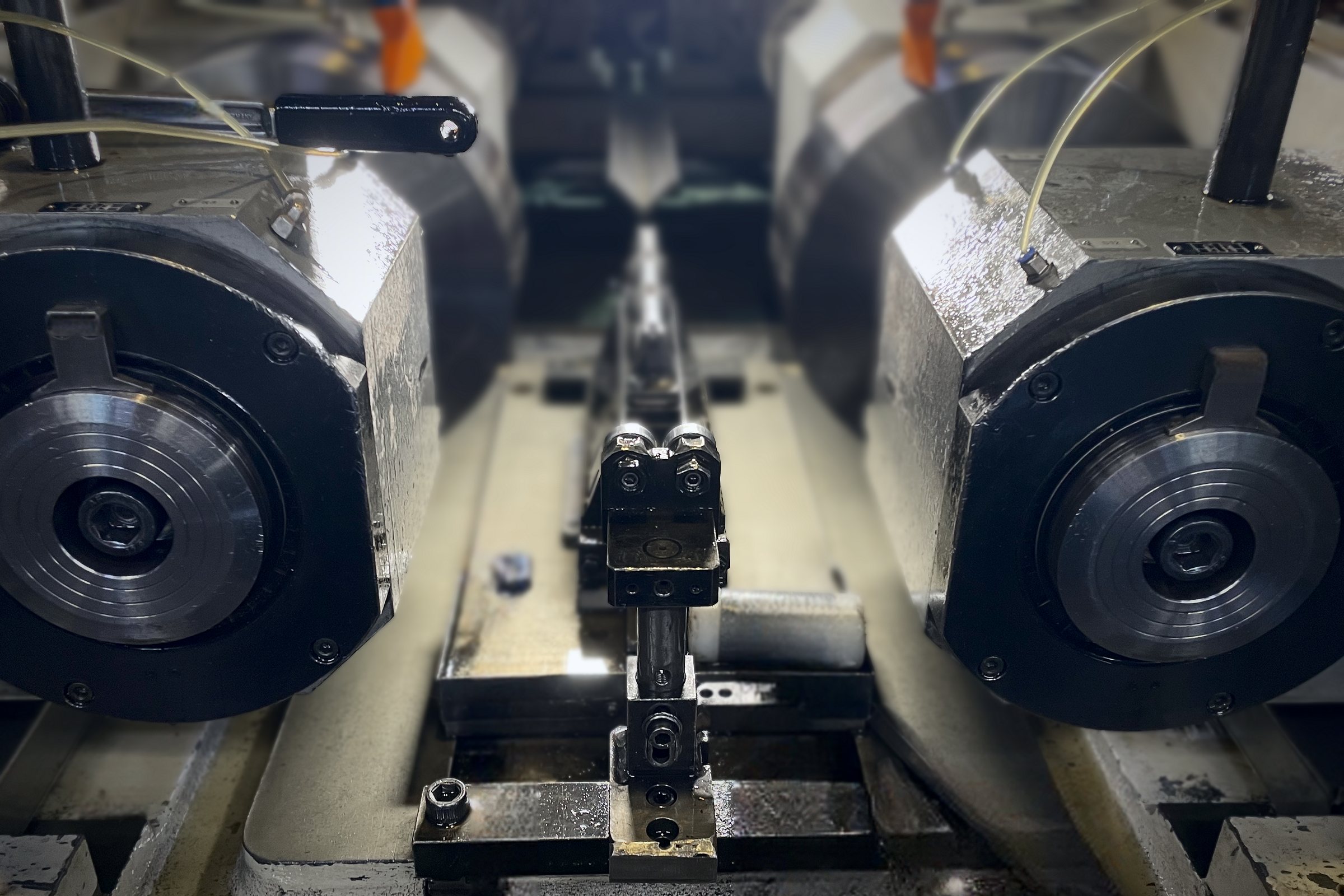
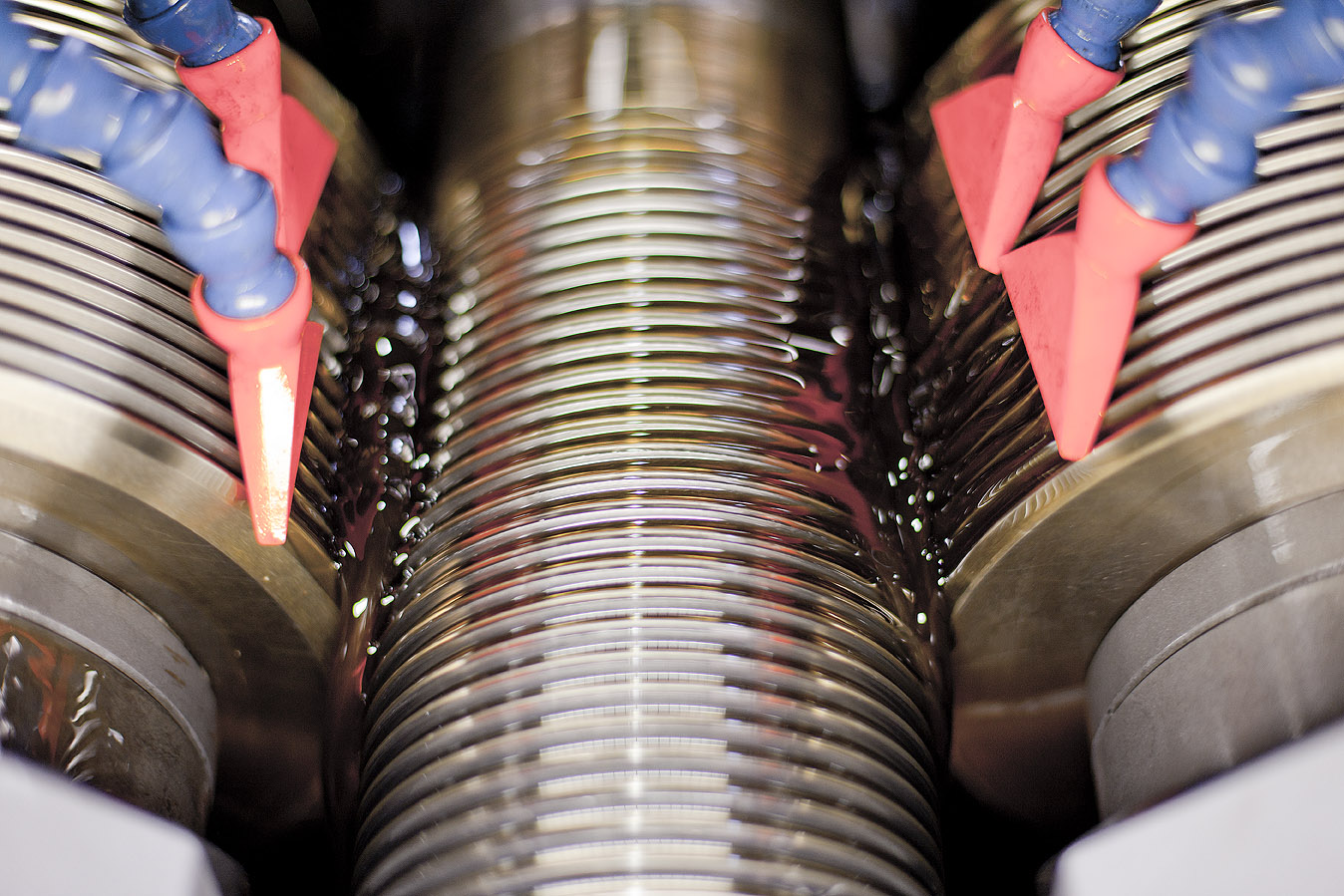
Thread rolling is a chipless forming process: two profiled rolling dies cold-form the thread into the shank under high pressure without removing any material. This is how RS Randack produces by far the majority of all external threads, on screws, bolts, studs and reduced-shank bolts to drawing or standard. We only produce cut threads when your drawing expressly requires them. Threads are typically possible up to M180, larger sizes on request.
M180
Rolled threads, typically up to
UN, UNR
American thread profiles
2
Methods: through-feed and in-feed (plunge)
12.9
even in the quenched and tempered condition
Why rolled threads are stronger
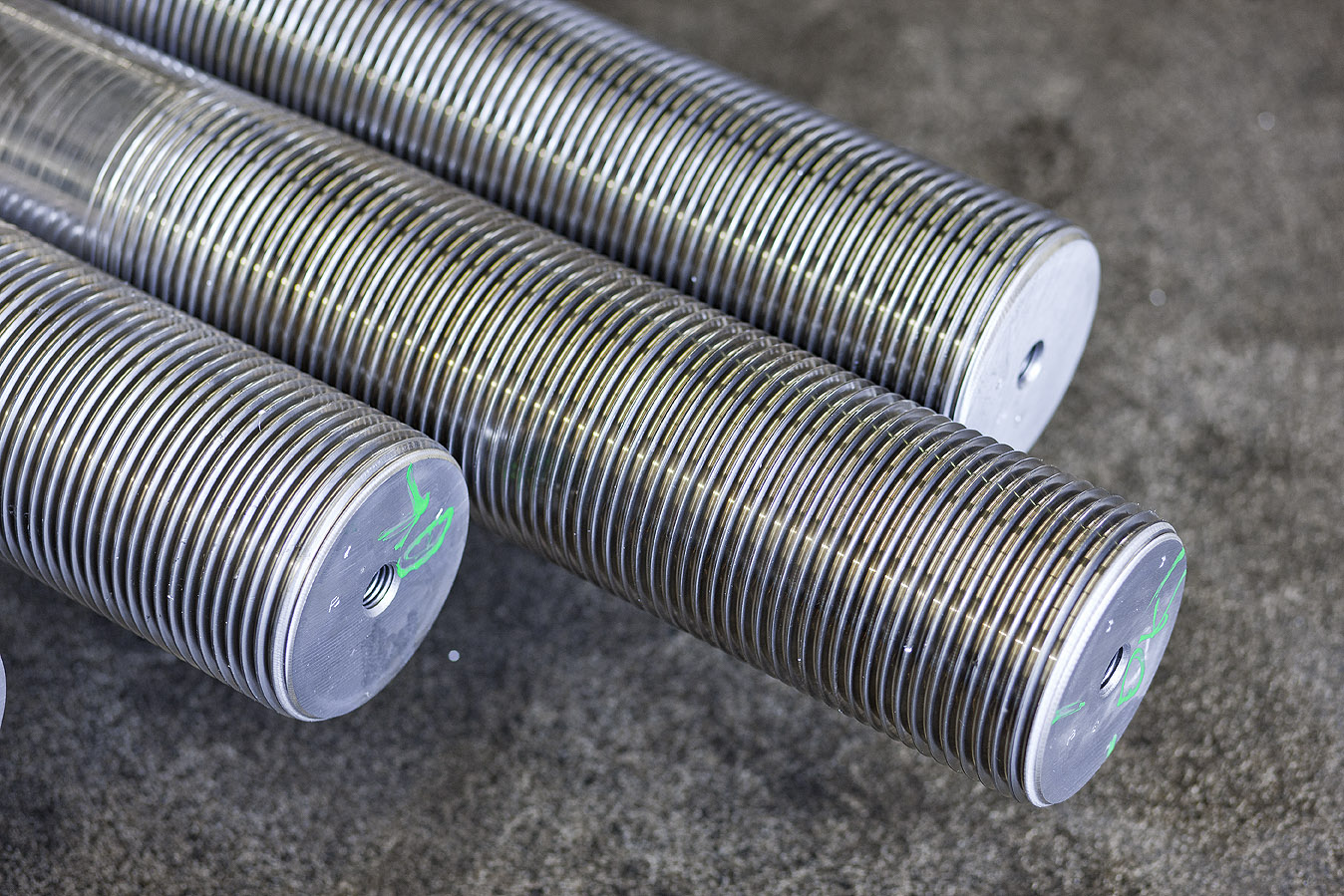
In rolling, the material is displaced, not cut. The grain flow follows the thread profile, the flanks and the thread root are work-hardened, and compressive residual stresses remain in the thread root. Precisely where the fatigue crack starts in a dynamically loaded bolt, a rolled thread therefore has a much higher fatigue strength than a cut one. The flanks also have a smoother surface. For joints under alternating load, for example in turbines, couplings, pressure equipment or high-pressure plants, the rolled thread is therefore the standard. Our knowledge base article Thread rolling vs. thread cutting compares both processes.
Which threads does RS Randack roll?
- Metric coarse and fine threads to ISO
- Inch threads and American profiles UN, UNC, UNF, 8UN and UNR; the UNR profile with its rounded root further reduces the notch effect, see American threads
- Threads for American material grades such as B7, L7 or B16 on stud bolts and studs
- Threads on reduced-shank bolts to DIN 2510, threaded rods and anchor bolts
Sizes: Threads typically up to M180, larger threads on request. There is no fixed limit, because the feasible size depends on several factors at once: the rolling force per unit area, the thread length, the material and its strength, the rolling technology and the thread form. Tell us the material, property class, thread and length, and we will tell you what is possible.
Two methods: through-feed and in-feed rolling
We roll long threads, for example on threaded rods or studs, by through-feed rolling: the workpiece travels axially between the dies, so the thread length is not limited by the die width. Short threads are produced by in-feed (plunge) rolling, in which the dies form the complete thread in a single cycle. For every thread, the blank diameter and pitch diameter are documented, also with a view to any subsequent coating.
Roll before or after quenching and tempering?
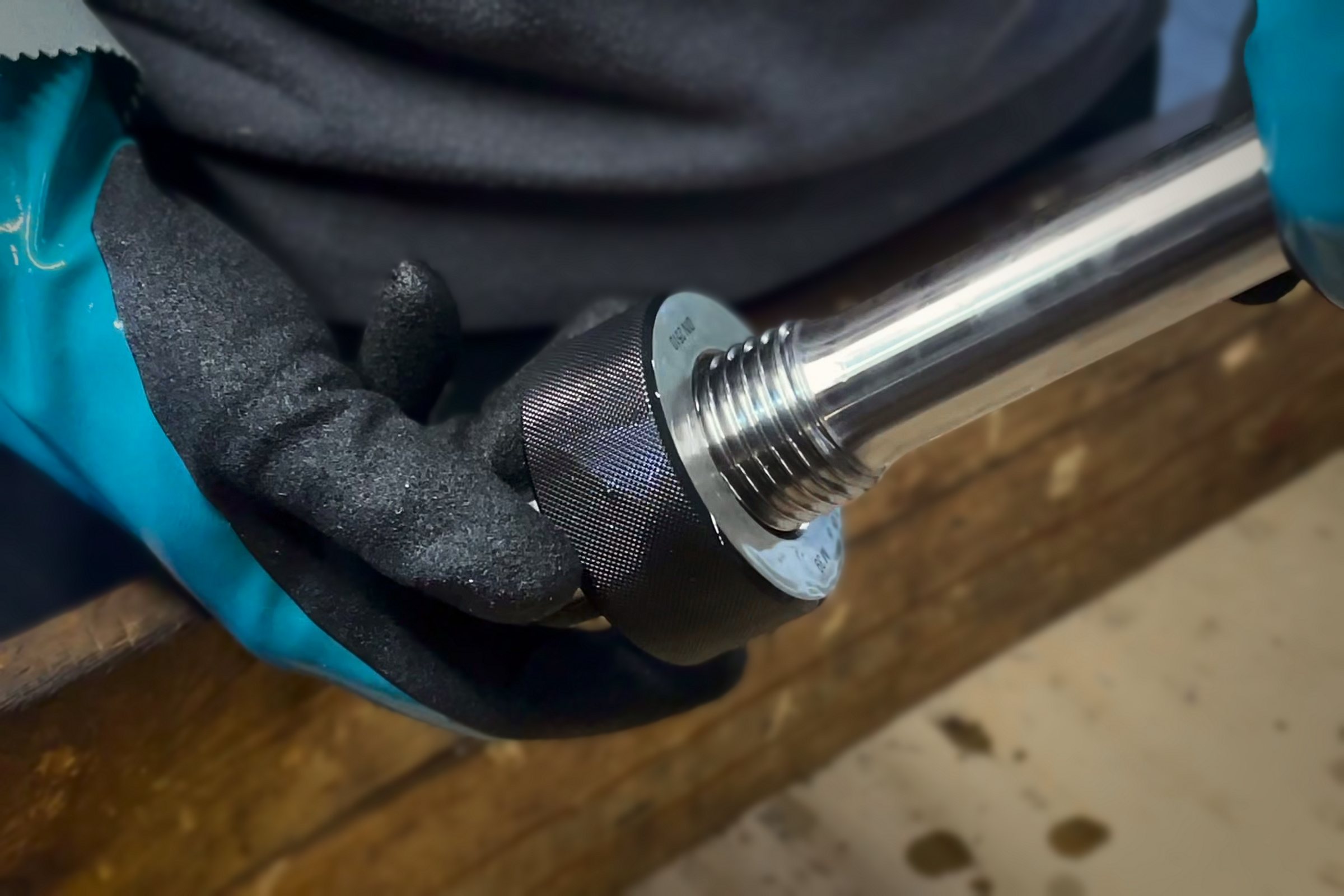
Both are possible. When the thread is rolled in the quenched and tempered condition, known as final rolling, work hardening and compressive residual stresses are retained because no further heat treatment follows. This is the gold standard for dynamically loaded joints and is expressly required on many drawings; the sequence follows your drawing. Production planning determines the right sequence for your part, for each material and drawing. Read more in our knowledge base article Rolling after heat treatment.
Materials
We roll Q&T steels such as 42CrMo4 (1.7225) and 30CrNiMo8 (1.6580), creep-resistant steels such as 21CrMoV5-7 (1.7709) and 40CrMoV4-6 (1.7711), stainless and duplex steels, nickel-based alloys and titanium, as well as American grades such as B7, L7 and B16. Materials that are difficult to roll in the quenched and tempered condition are the norm here, not the exception. Whether your material can be rolled in the required property class is something we clarify for the specific part.
From raw material to finished thread
Cutting from single-heat bar stock, hot forming of the head in our own forge where required, heat treatment by a partner with verification in our own laboratory, turning to the blank diameter in CNC machining, thread rolling, marking, inspection, and coating and third-party inspection on request. Every step runs on the same works order with the same batch.
How the rolled thread is inspected
The first parts of each lot are checked with a ring gauge or gauge nut and measured at the pitch diameter, followed by sample checks during the run. For property class 12.9, we also inspect the thread surface for laps to ISO 6157-3. From M100, the pitch diameter is documented. Threads that are to be coated afterwards are rolled to the lower tolerance limit so that the gauge still fits after coating. On request, you receive a 3.1 or 3.2 inspection certificate to EN 10204 for each lot.
What we need for a quotation
Drawing or standard, material and property class, thread and thread length, quantity, type of certificate and, if required, the coating. Rush orders are one of RS Randack’s strengths. You will hear from us within a few hours. In many cases, delivery within 24 hours is possible.
Frequently asked questions
Questions and answers about thread rolling
What is the maximum thread size RS Randack can roll?
Typically up to M180, larger threads on request. The feasible size depends on rolling force per unit area, thread length, material, strength, rolling technology and thread form.
Can a thread be rolled in the quenched and tempered condition?
Yes, this is called final rolling (rolling after heat treatment). It is specified on the drawing for highly stressed joints and fully retains the work hardening and compressive residual stresses in the thread root.
Are rolled threads also coated?
Yes. For zinc flake, electroplated zinc or anti-friction coatings, the thread is rolled to the lower tolerance limit so that the gauge still fits after coating.
Enquire about rolled threads to drawing
Urgent? You will hear from us within a few hours.