
Production
CNC machining: turning, milling and grinding
Machining up to 300 mm diameter and 3,500 mm length
Step 5
Machining up to 300 mm diameter and 3,500 mm length
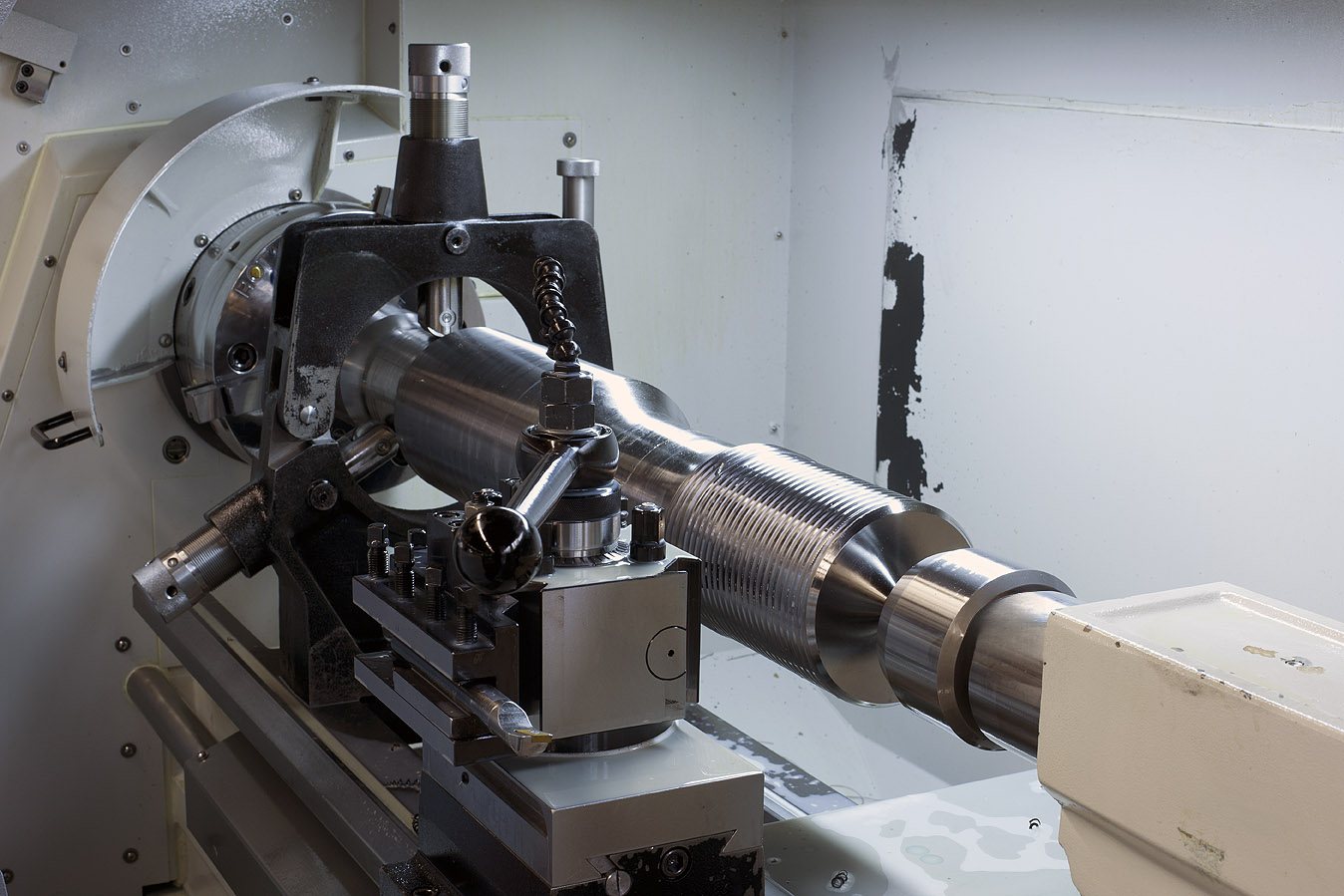
At RS Randack, CNC turning centres produce special screws, bolts, studs, reduced-shank bolts, nuts and turned parts to drawing, typically up to 300 mm diameter and 3,500 mm length, larger sizes on request. We turn forged blanks from our own forge as well as billets straight from the saw, in both the soft and the quenched and tempered condition. Programming, workholding, tool issue and maintenance are all handled in-house, and production takes place in Hagen.
300 mm
Diameter, typically up to
3,500 mm
Length, typically up to
Ra 1.6
Turned surface finish
H7
Fit tolerance
What our turning shop can do
- Diameters typically up to 300 mm, lengths typically up to 3,500 mm; long, slender parts with a travelling steady rest, parts extending beyond the spindle supported through the spindle bore
- Bar machining with bar feeder up to 60 mm diameter for smaller series
- Turned surface finishes down to Ra 1.6, fits to H7, finer tolerances by grinding
- Pre-turning to the pitch diameter for thread rolling, documented from M100
- Difficult-to-machine materials: Q&T steels up to property class 12.9, duplex, special austenitic steels such as 1.3974, nickel-based alloys, titanium
Material and length are the challenge, not geometry
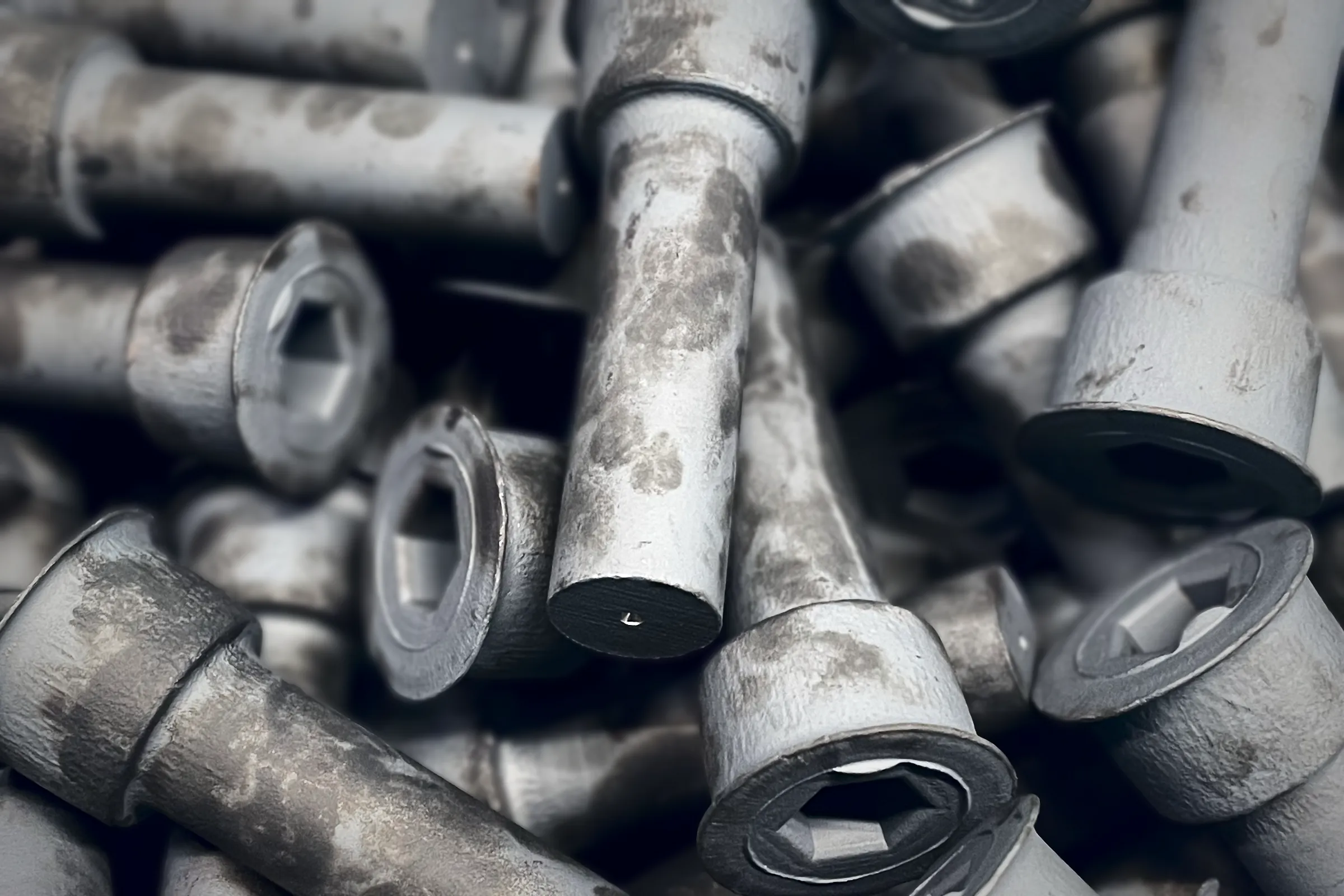
The shape of a special fastener is rarely complicated. The difficulty lies in the material and the length. A quenched and tempered 30CrNiMo8 requires different inserts, cutting speeds and feed rates from free-cutting steel; with duplex, the cutting speed limits the tool life of the cutting edge; non-magnetic austenitic steels and nickel-based alloys work-harden during machining and are hard on tools. Cutting data start from the insert manufacturer’s recommendations and are then fine-tuned for each set-up and machine based on experience. Long reduced-shank bolts and shafts are supported with a steady rest so that the shank stays round and dimensionally accurate over its entire length.
How a lot moves through the turning shop
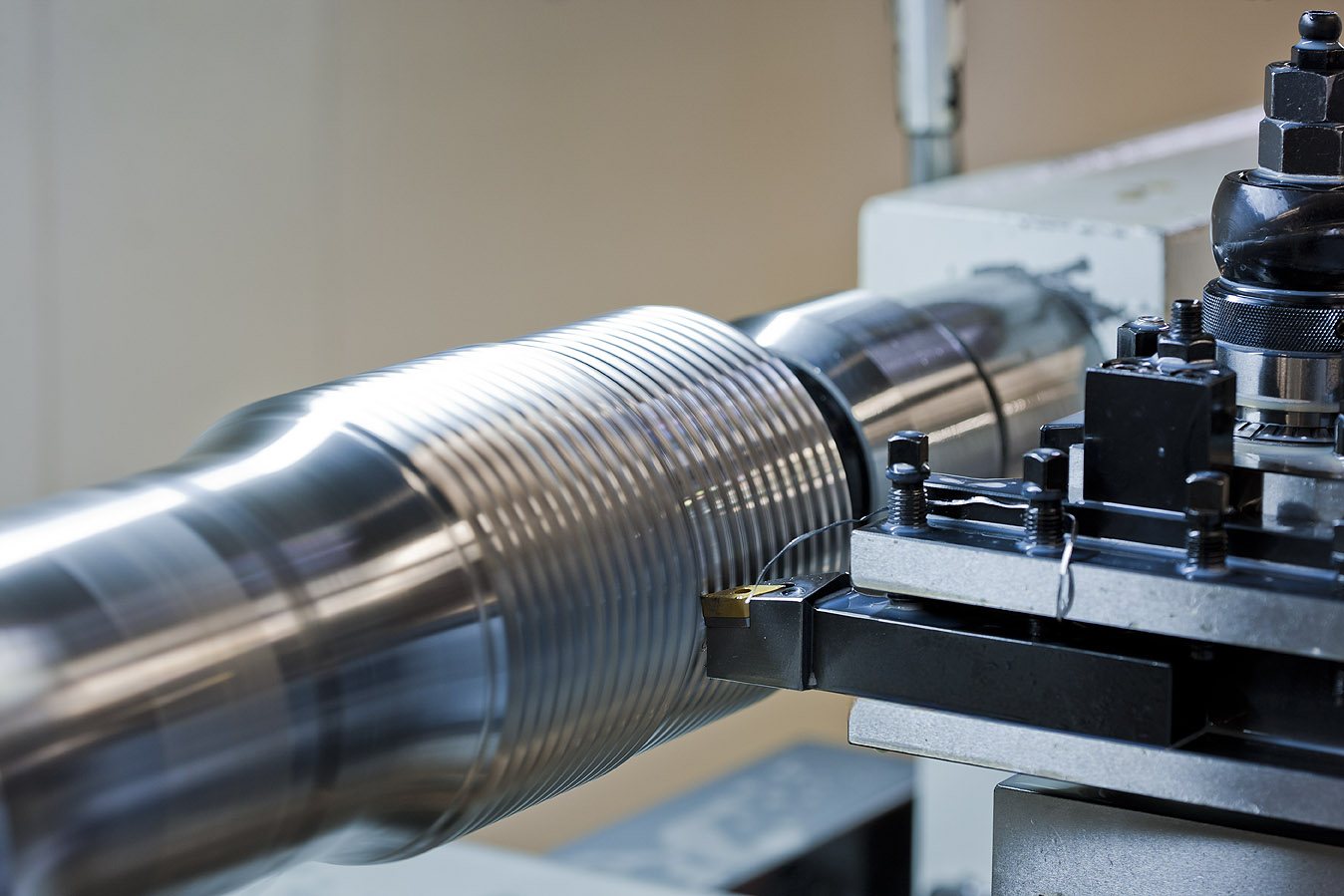
- Set-up: The setter programs the machine and clamps the workpiece. Forged parts sit in a workholding fixture from our own toolroom, supported by the tailstock.
- First article inspection under the four-eyes principle: The first part is fully measured against the drawing, and a second employee checks it and signs it off. Only then does series production start.
- Series production: The operator measures to the drawing using a calliper, micrometer and surface roughness tester; at least every tenth part is checked, and after a tool change the first two parts are checked again.
- Documentation: From M100, the pitch diameter for thread rolling is recorded on the works order. Dimensions are changed only by production planning, never at the machine.
- Next: Thread rolling, stamping with manufacturer’s mark and batch number, inspection.
Turned parts without threads
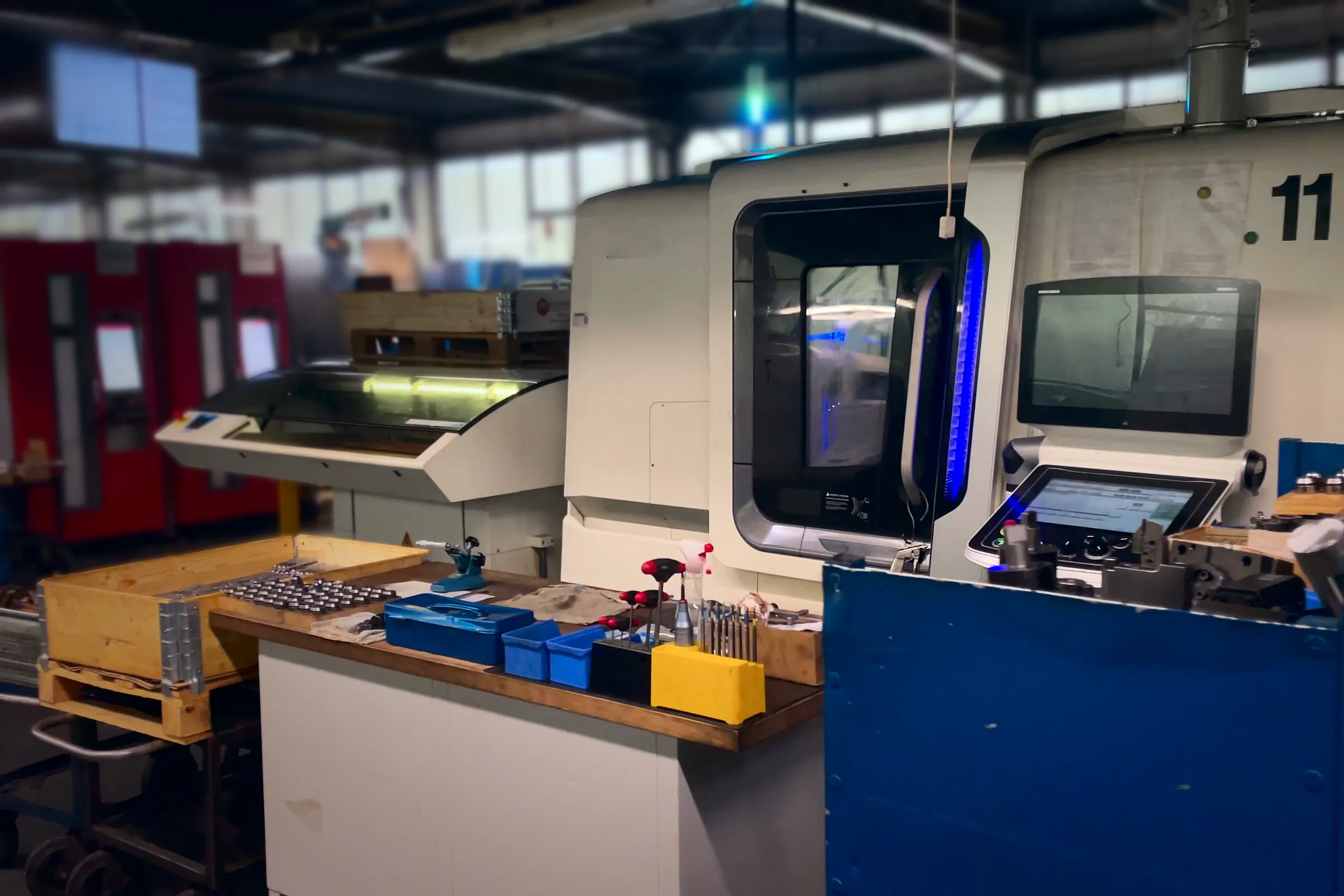
In addition to bolts and screws, the turning shop produces pins, bushes, flanges, sleeves, axles and shafts to drawing from the same materials, on request with milling, gear cutting, deep-hole drilling or an induction-hardened zone via partners. For examples, see our turned parts product range.
Quality concept in the turning shop
First article release with signature, sampling as specified, roughness measurement within the department, calibrated measuring equipment, measurement on the optical measuring machine for 100% inspection, and internal non-conformance reporting before any release to the next step. Whatever leaves the turning shop has been measured; whatever goes to the customer has also been inspected in shipping, see Shipping.
Frequently asked questions
Questions and answers about CNC machining
Which sizes does RS Randack turn?
Typically up to 300 mm diameter and 3,500 mm length, larger sizes on request. Small diameters from M4 are also produced, with a bar feeder for series production from bar.
Does RS Randack also turn duplex, Inconel and titanium?
Yes. Difficult-to-machine materials are part of everyday work; cutting data, tools and workholding are set up for them. Tell us the material number or trade name and the delivery condition.
What information do you need to produce a turned part?
Drawing with tolerances and surface specifications, material and delivery condition (soft, quenched and tempered, solution-annealed), quantity, type of certificate and coating, if applicable. For threads: rolled or cut, tolerance class.
Enquire about turned parts and special fasteners to drawing
Urgent? You will hear from us within a few hours.