Production
Toolmaking and contract EDM
In-house dies instead of waiting for a supplier
Step 3
In-house dies instead of waiting for a supplier
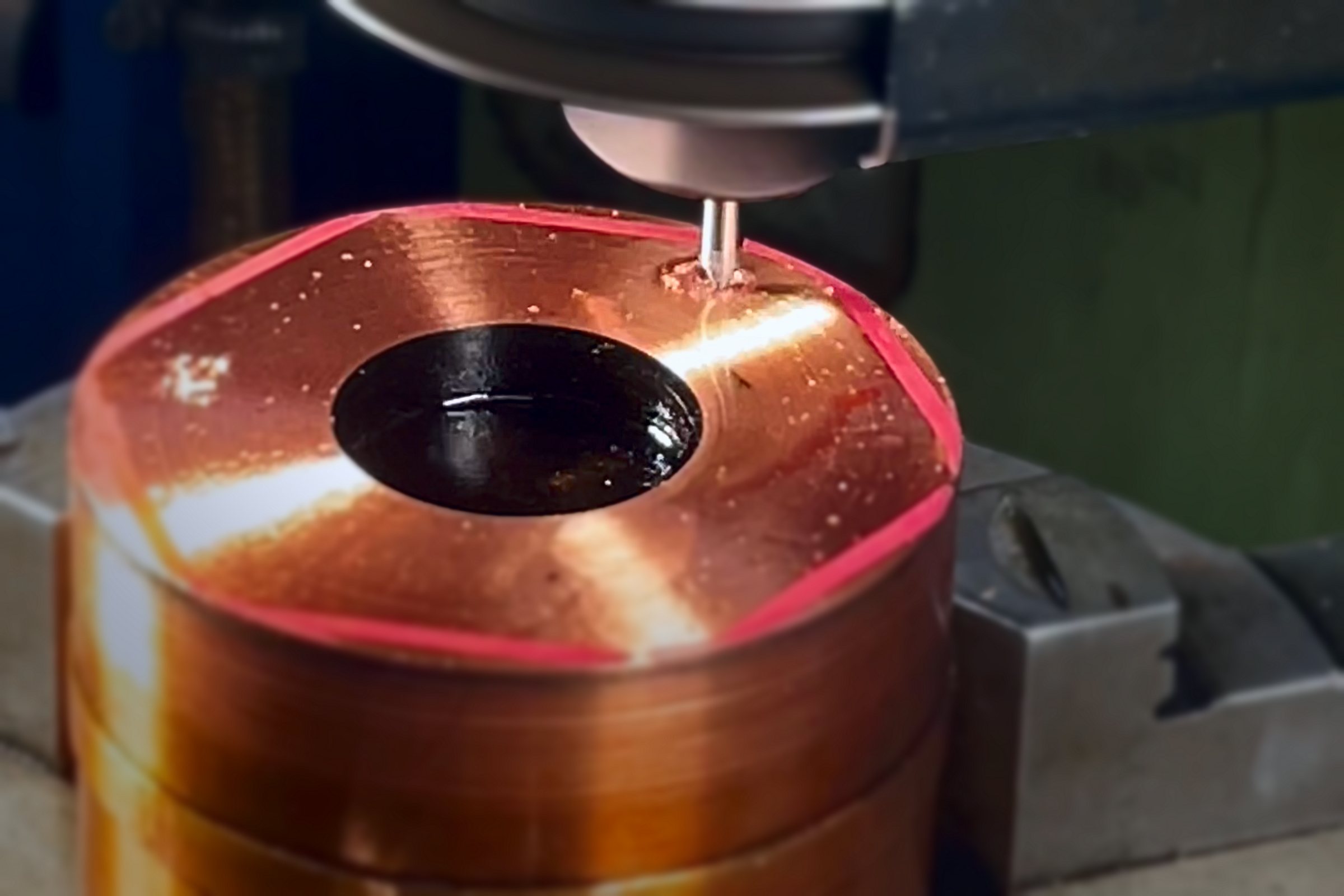
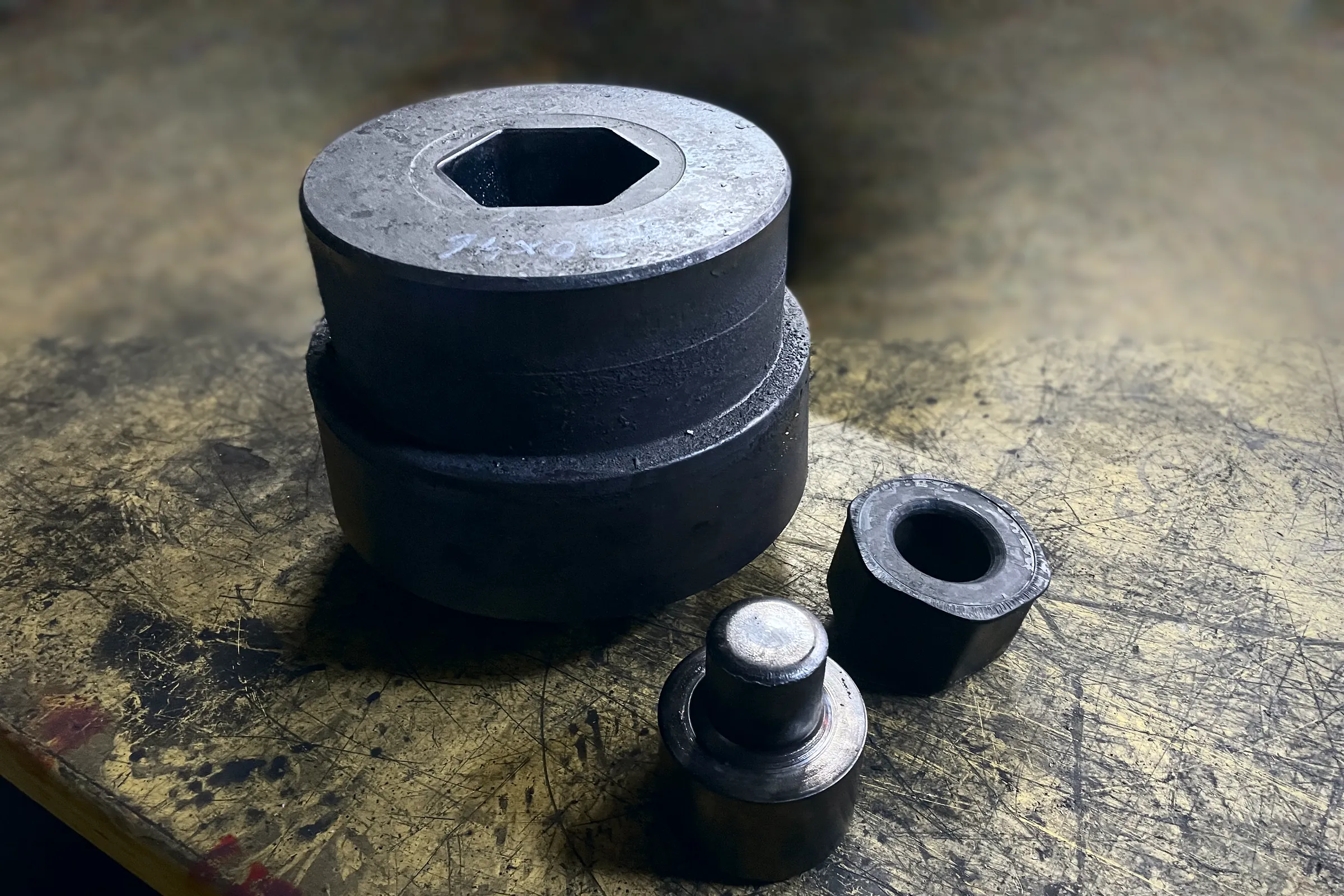
Our in-house toolroom is the reason RS Randack can forge a new drawing part quickly. Dies, punches, piercing tools and the workholding fixtures for the CNC turning centres are made in-house: the blank made of hot-work tool steel is pre-turned in the annealed condition, hardened and then brought to shape on one of three die-sinking EDM machines using electrodes made in-house. A new head shape therefore depends not on a toolmaker’s lead time but on our own machines. RS Randack offers spare capacity on its EDM machines as contract EDM for your parts.
3
Die-sinking EDM machines
100 %
Tool check before every lot
1 to 3 h
EDM time per die
Cu
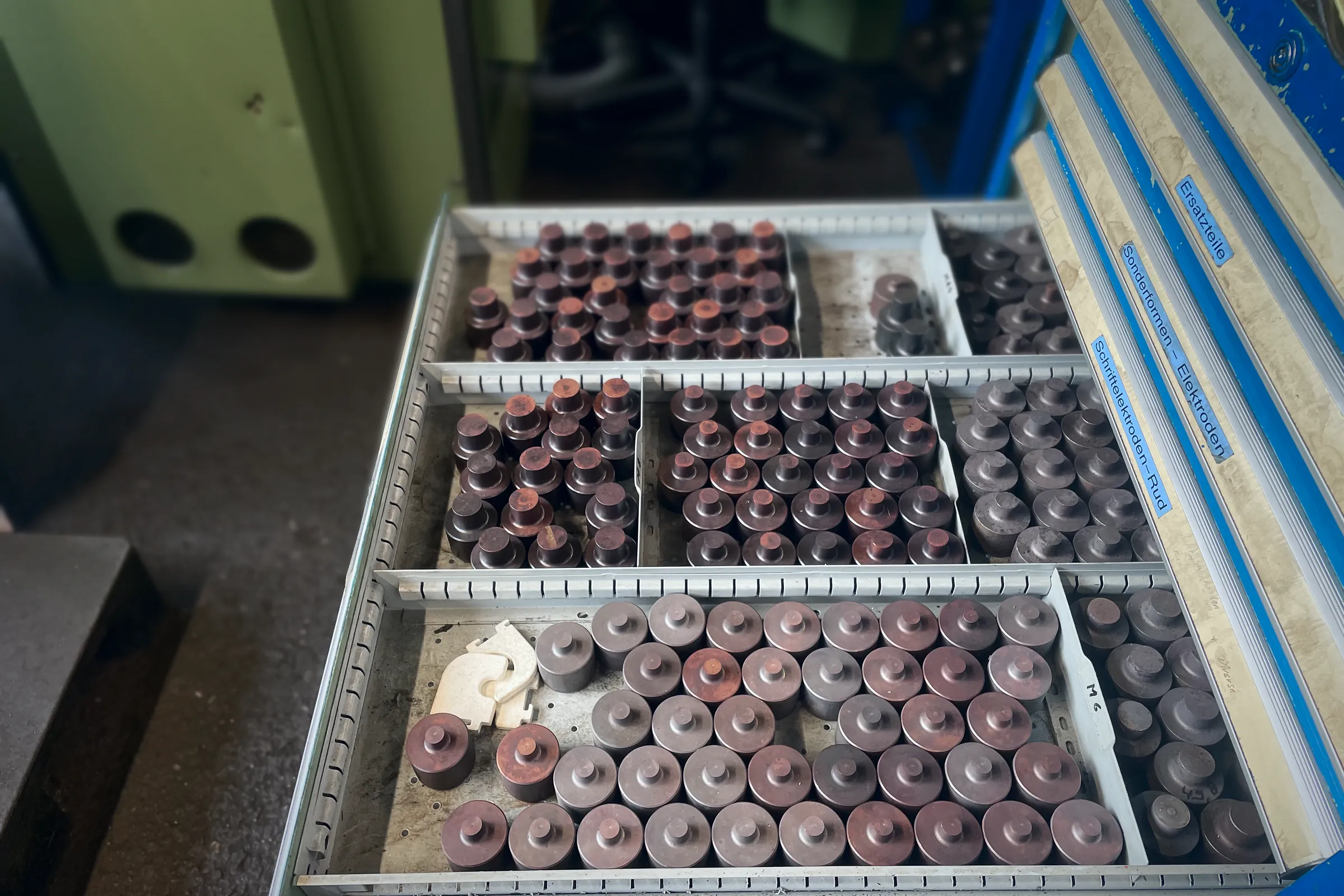
Electrodes made in-house
What is die-sinking EDM?
Die-sinking EDM, also known as spark erosion, removes electrically conductive material without contact: in a dielectric fluid, many thousands of small sparks per second strike between an electrode and the workpiece, each melting and vaporising a tiny volume. The electrode sinks into the workpiece and reproduces its shape as a negative. The process works regardless of the material’s hardness and produces engravings, edges and cavities that cannot be machined in hardened steel. This is exactly what a forging die needs: a sharply contoured hex or square form with marking that withstands steel at 1,200 °C.
How a forging die is made at RS Randack
- Design: The upper and lower dies, with forging allowance, draft angles and flash land, are derived from the part drawing.
- Pre-turning: The die blank made of hot-work tool steel is pre-turned in the annealed condition; the basic shape is produced by machining.
- Hardening: The blank is hardened and tempered by a partner so that the die can withstand the temperature and pressure of the forging press.
- Electrode: The copper or graphite electrode is turned and milled in-house; it carries the contour of the head and the marking in mirror image.
- EDM: The die-sinking EDM machine sinks the electrode into the hardened die; the machine works unattended for hours.
- Inspection and release: The first parts from the new tool are measured, and the tool is checked for function before every further lot.
A complete tool set is produced in this way within a few working days; the actual EDM process takes one to three hours depending on the shape. Small lots are engraved after forging; for larger quantities, a die with an integrated marking stamp pays off.
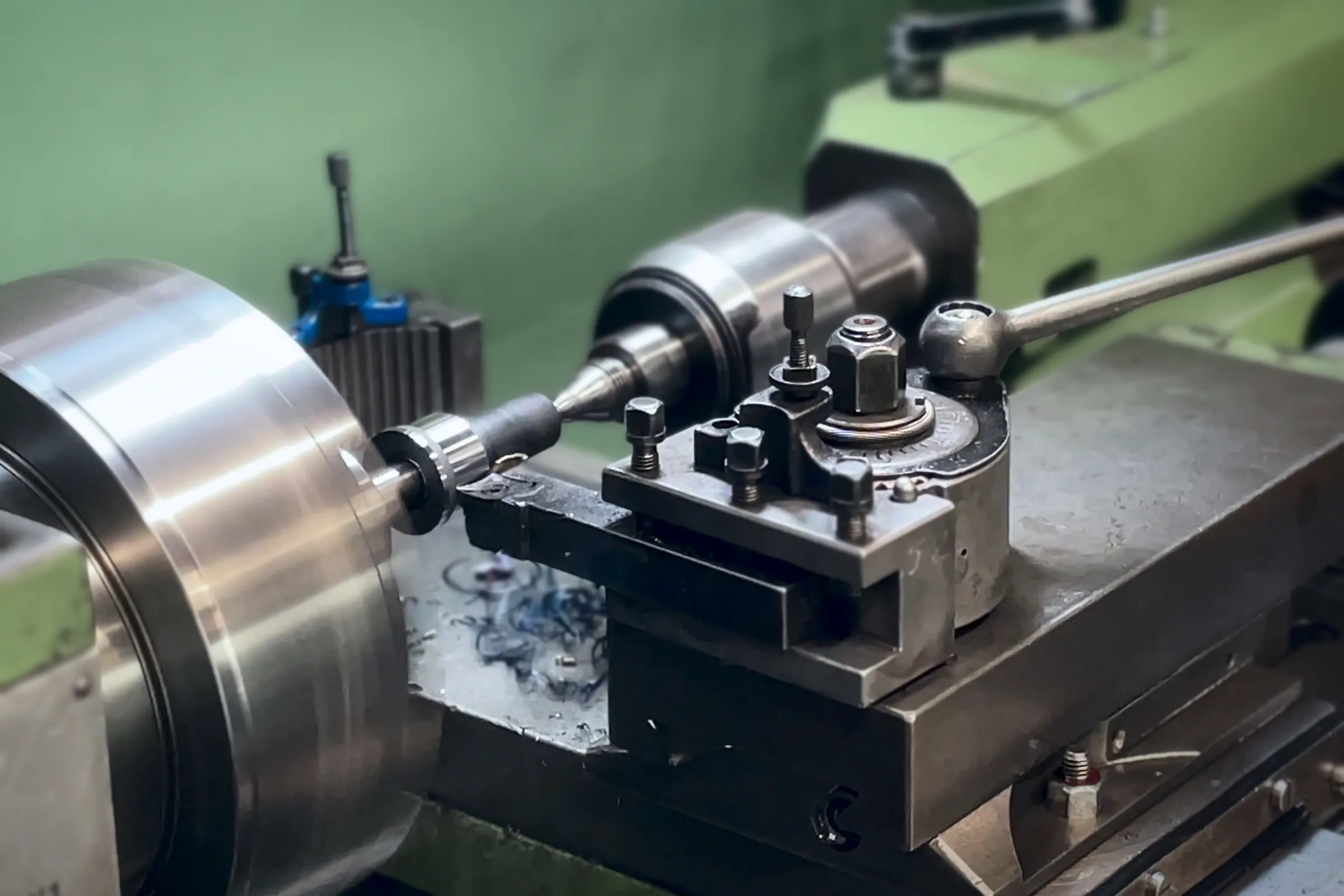
Contract EDM: your parts on our machines
Our three die-sinking EDM machines are not always fully booked with in-house dies. RS Randack therefore also offers die-sinking EDM as a service: engravings, internal forms, openings and contours in hardened steels, tool steels and other conductive materials, with electrode manufacture in-house. Typical jobs include die and mould inserts, embossing punches, markings, internal hexagons and internal multi-tooth profiles in hardened parts, clamping jaws and fixture components. Send us the drawing, material, hardness, quantity and deadline, and we will quickly tell you whether and when we can fit it in.
Workholding and fixtures for our own production
In addition to forging tools, the toolroom builds the workholding fixtures for forged parts on the CNC turning centres, fixture plates for thread cutting in nuts and aids for inspection and marking. A drawing part that has never existed before thus gets its tooling, workholding and production under one roof; find out more on the Forging and CNC machining pages.
Frequently asked questions
Questions and answers about toolmaking and contract EDM
What is the difference between die-sinking EDM and wire EDM?
In die-sinking EDM, a shaped electrode reproduces its contour as a cavity in the workpiece; in wire EDM, a thin wire cuts a contour through the workpiece. RS Randack carries out die-sinking EDM in-house; wire EDM is outsourced to a partner when required.
Which materials can be EDM-machined?
All electrically conductive materials, regardless of their hardness: hardened tool steels, Q&T steels, stainless steels, cemented carbide and nickel-based alloys.
Does RS Randack also build tools for third-party forged parts?
On request. The toolroom is primarily there for our own forge; spare capacity is available for contract EDM and individual tooling orders.
Enquire about contract EDM or tooling for your drawing part
Urgent? You will hear from us within a few hours.