
Production
Heat treatment, quenching and tempering
Treated by partners, verified in our own laboratory
Step 4
Treated by partners, verified in our own laboratory
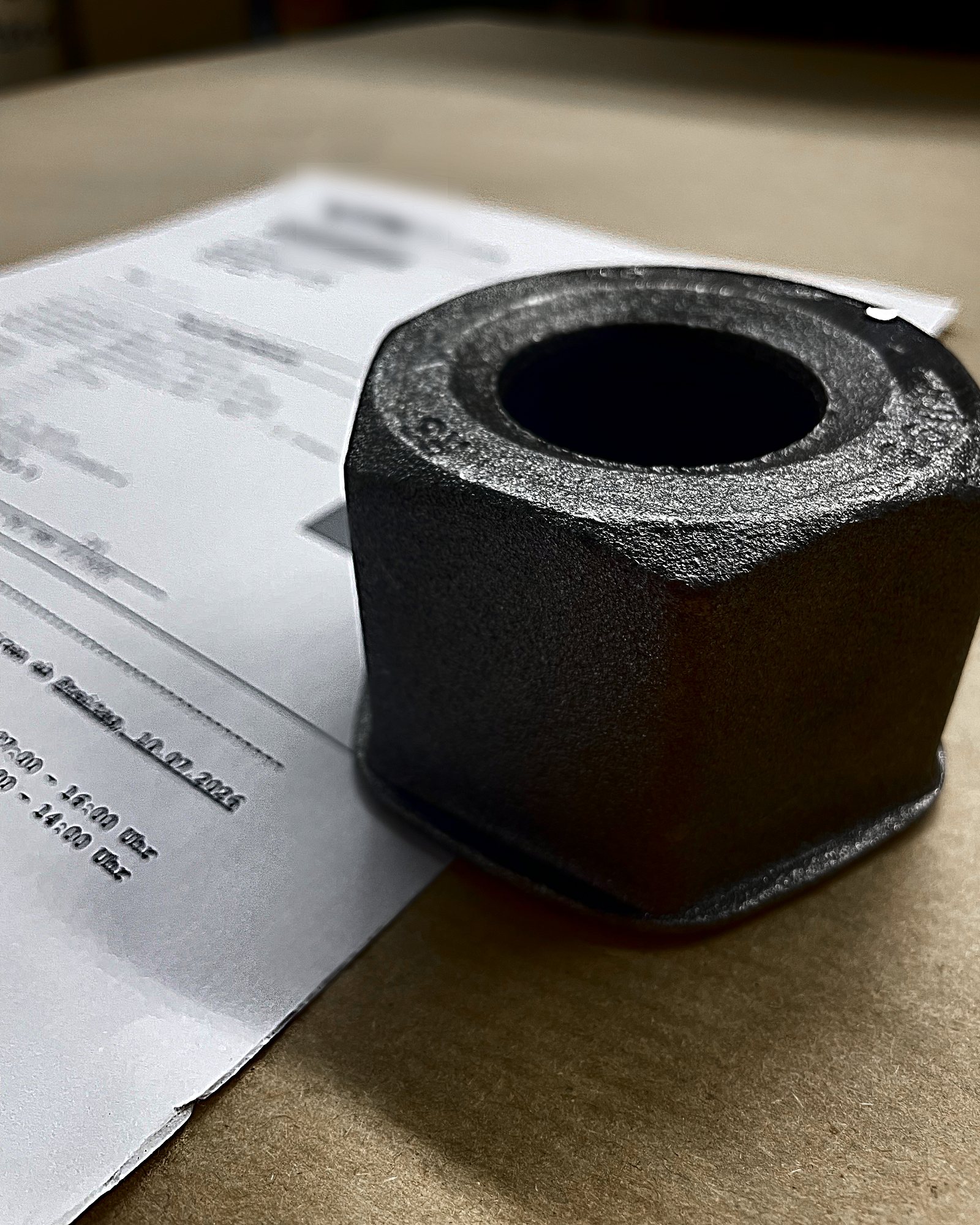
Heat treatment gives a bolt its strength. At RS Randack, quenching and tempering, hardening, normalising, stress relieving and solution annealing are carried out in close, long-standing cooperation with qualified partners, while control and verification remain in-house: the specified hardness range for each material is stated on the works order, and every lot is tested in our own materials laboratory on its return before it moves on. For you as a customer, this means the property class is not assumed. It is measured.
8.8 to 12.9
Property classes and above
1 test bar
per lot, from the same heat
3
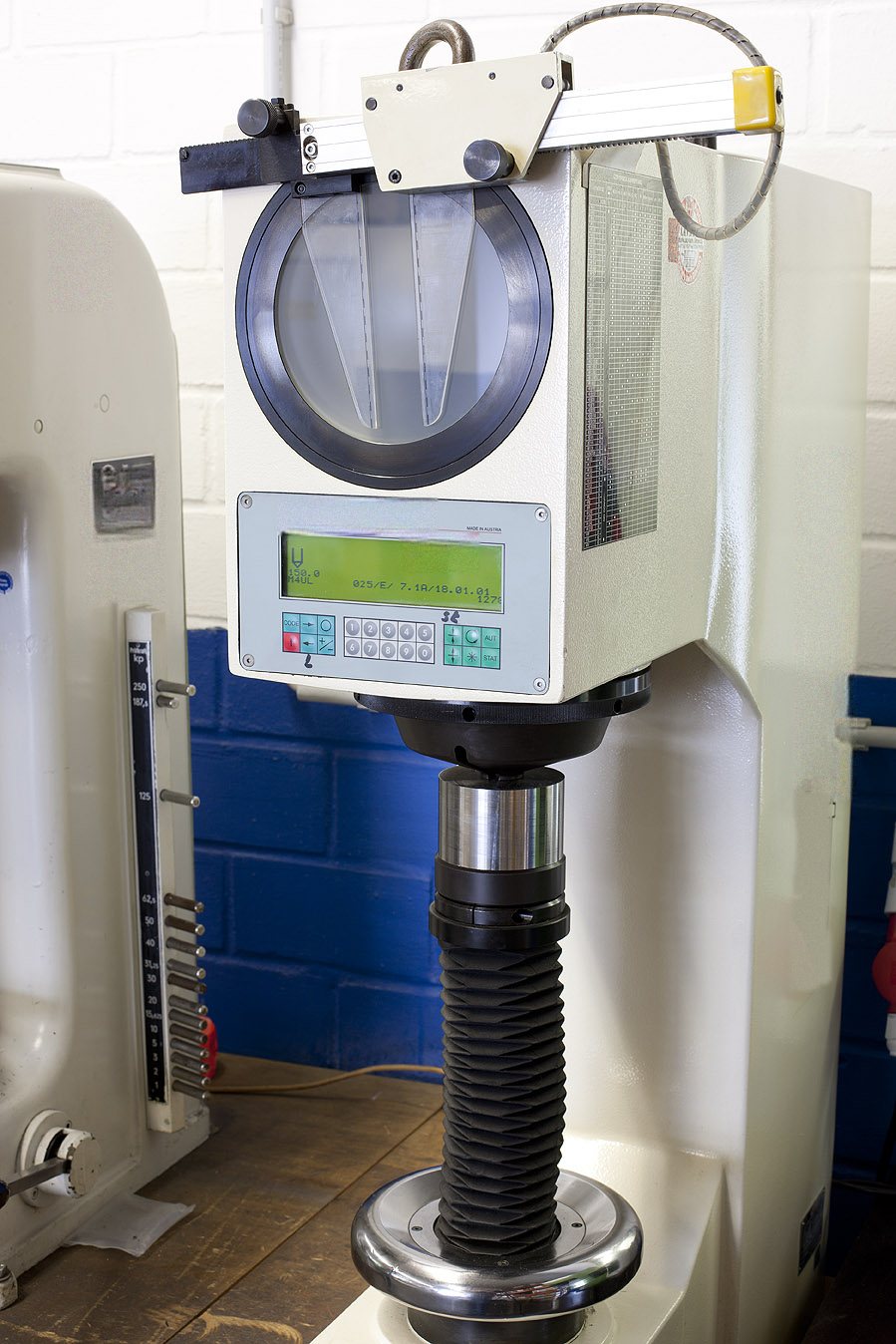
Hardness test methods: Brinell, Vickers, Rockwell
100 %
Verified before the next step
What happens during quenching and tempering
Quenching and tempering means hardening followed by tempering. The part is heated above the transformation temperature, quenched in oil, polymer or water and then tempered at a temperature that depends on the material. Quenching produces a hard but brittle microstructure; tempering sets the balance between strength and toughness. The higher the tempering temperature, the tougher the steel becomes and the lower its strength. Property class 8.8, 10.9 or 12.9 is achieved in exactly this step, not during turning and not during threading.
Which heat treatments are used?
- Quenching and tempering of Q&T steels such as 42CrMo4, 30CrNiMo8 and creep-resistant steels to EN 10269 to the required property class or hardness range, for example around 320 to 380 HV for a 10.9 bolt.
- Solution annealing and quenching of austenitic stainless steels and nickel-based alloys.
- Stress relieving after forging or before finish machining of long, slender parts, so that they do not distort during turning.
- Baking after electroplating to prevent hydrogen embrittlement, carried out by the coating partner.
- Induction hardening of individual zones and case hardening of turned parts, as required.
When is the part quenched and tempered: before or after machining?
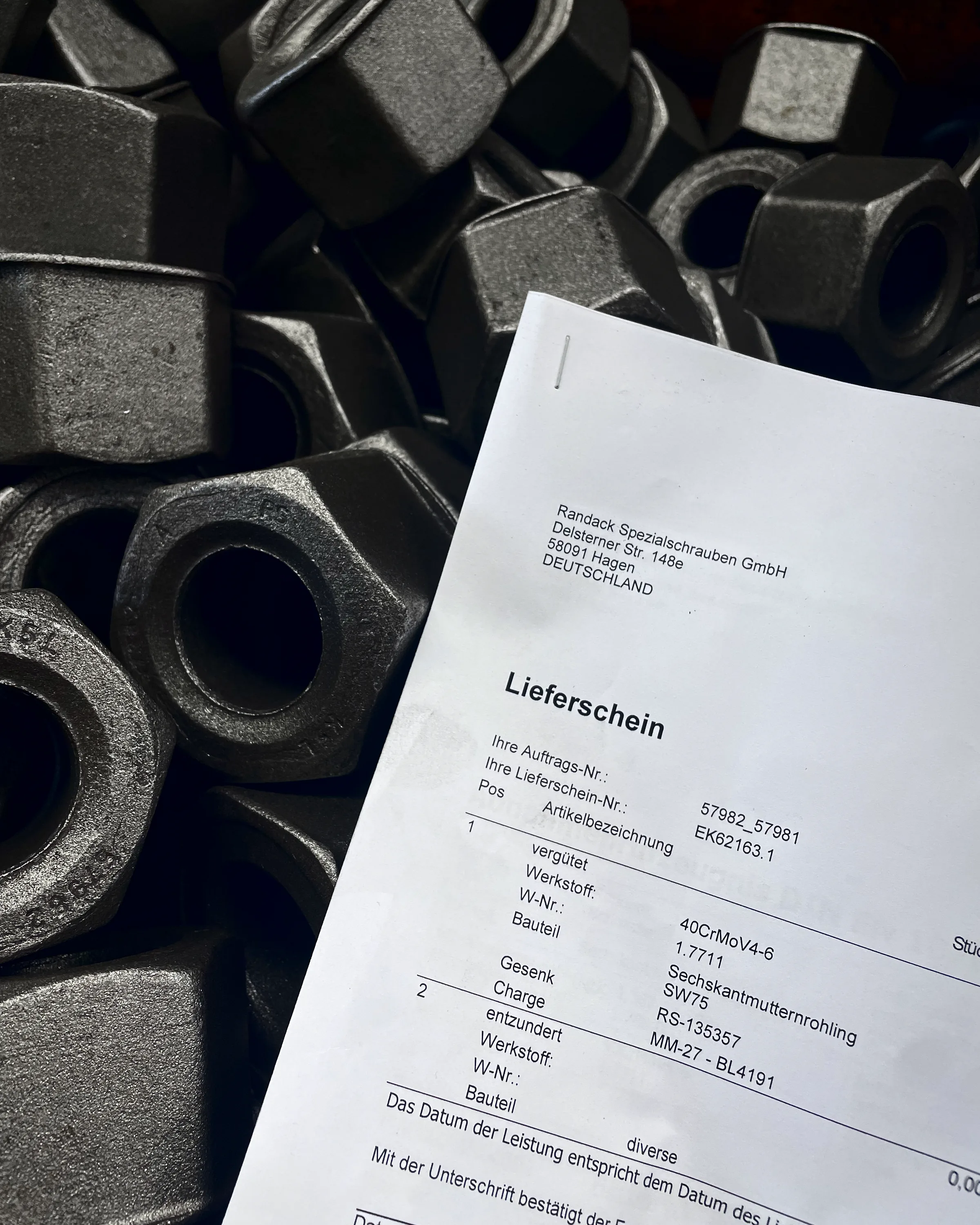
Production planning decides this for each material and part. Forged blanks are usually shot-blasted, quenched and tempered, and then finish-machined on the CNC turning centres; the thread is rolled in the quenched and tempered condition when the drawing calls for final rolling. Some materials are annealed in between, machined and only then quenched and tempered. The sequence is stated on the works order so that hardness testing and thread rolling take place at the right point in the process.
How we verify it in our own laboratory
With every lot, a test bar from the same heat accompanies the parts through forging and heat treatment. On its return, the materials laboratory tests:
- Hardness per batch to Brinell, Vickers or Rockwell, where required as a hardness profile across the section to prove that large diameters are quenched and tempered through to the core.
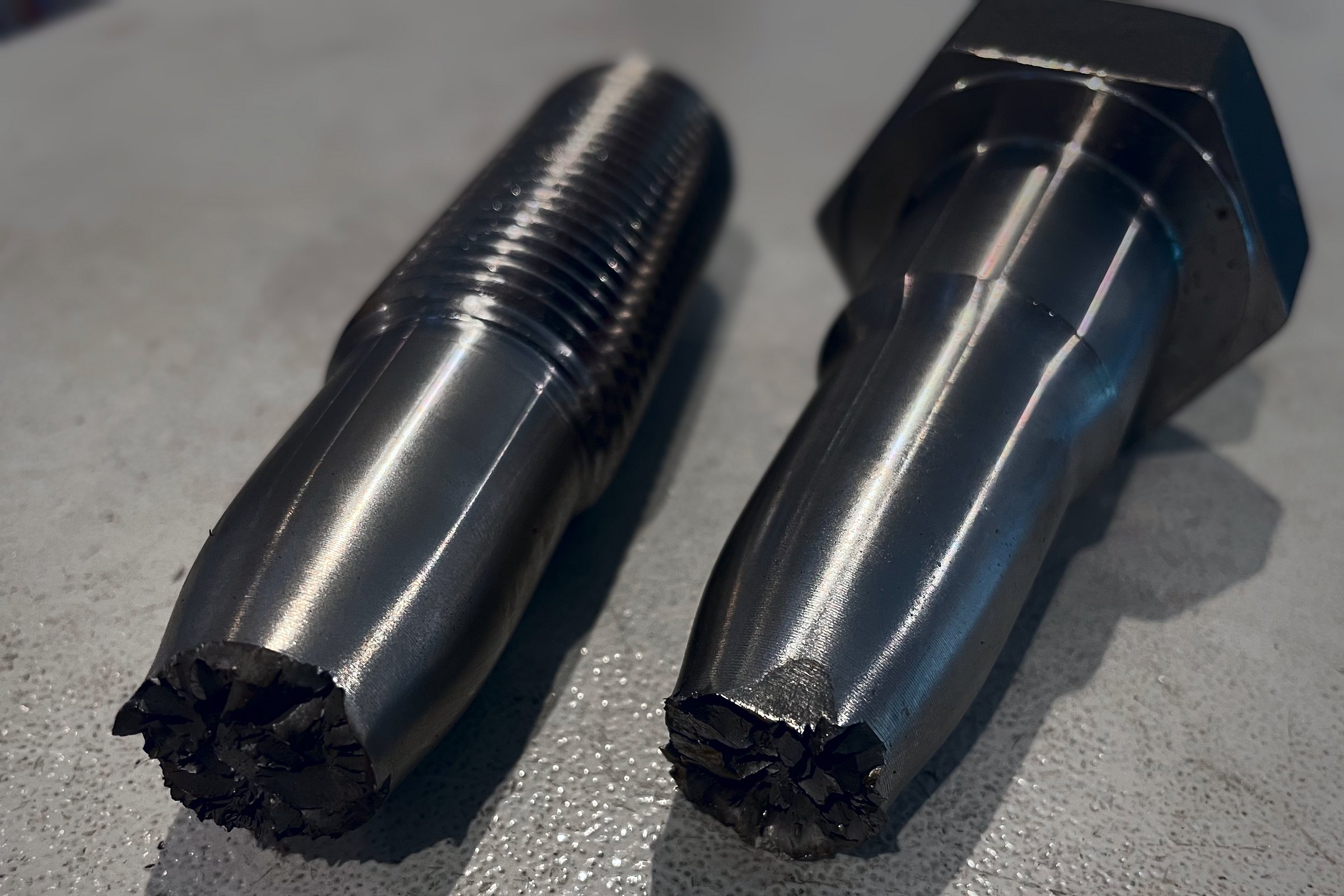
- Tensile test on the test bar: tensile strength, yield strength, elongation, reduction of area; for parts subject to third-party inspection, also on the full-size bolt.
- Charpy impact energy at room or low temperature, if required, see Charpy impact test.
- Microstructure in the micrograph, surface decarburisation and carburisation.
The lot moves on only once it has passed. If any values are missing, the lot does not move on. The results are documented in the 3.1 or 3.2 inspection certificate.
What you should specify
Property class or hardness range, required minimum values for sizes above M39, service temperature, impact test requirement and test temperature, and the standard to which testing is to be carried out. If anything is unclear, RS Randack will propose the material and heat treatment.
Frequently asked questions
Questions and answers about heat treatment
Does RS Randack quench and temper in-house?
The heat treatment itself is carried out by qualified partners with whom RS Randack has worked for many years. Specification, test bar, hardness testing, tensile testing and microstructural examination are handled in our own materials laboratory in Hagen.
How can I tell whether a bolt has been properly quenched and tempered?
From the test evidence: hardness per batch, tensile test on the test bar or full-size bolt, and microstructure in the micrograph, documented in the 3.1 or 3.2 inspection certificate. From the outside, a quenched and tempered part cannot be distinguished from one that has not been quenched and tempered.
What happens to a lot whose hardness is out of range?
It is blocked; nothing is shipped that does not match the certificate.
Enquire about quenched and tempered special fasteners with verified strength
Urgent? You will hear from us within a few hours.