Knowledge base
Induction heating before forging
How a bar section reaches forging temperature in seconds, and what that means for the part
Term explained
How a bar section reaches forging temperature in seconds, and what that means for the part
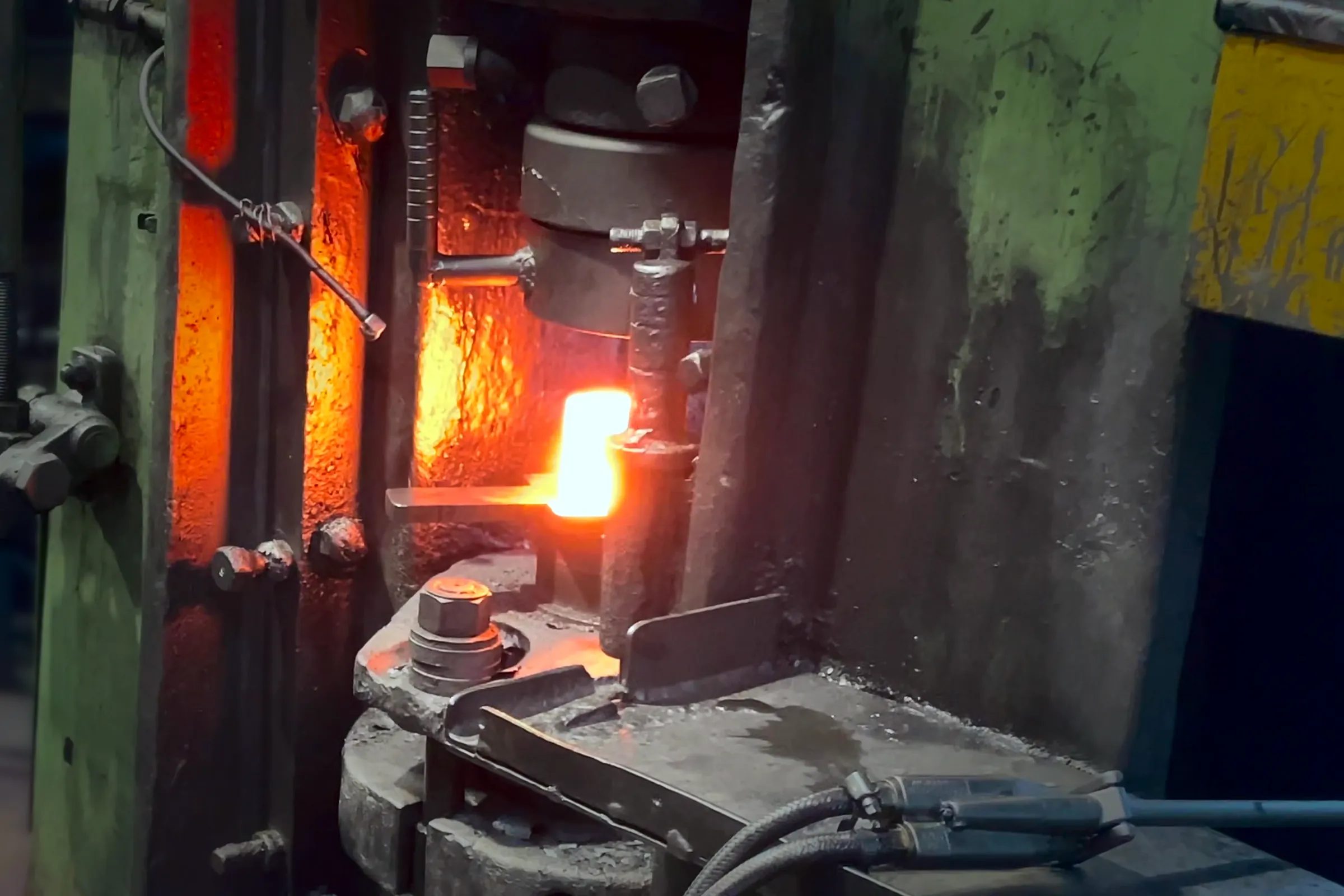
In induction heating, the bar billet sits inside a coil through which alternating current flows. The alternating magnetic field induces eddy currents in the steel, which generate the heat inside the part itself, without a flame and without contact. Within a few seconds to a few minutes, the area to be forged reaches the forging temperature of around 1,200 °C, while the rest of the part stays cool. Heat is applied only where the part is formed: the head, the collar, the end.
What this means for quality
- Reproducible: Energy and time are stored for each part, so every part in the lot receives the same heating; the temperature is measured and monitored.
- Less scale and surface decarburisation: The short time at high temperature means that hardly any oxide layer forms and the carbon at the surface is preserved, which later benefits strength and surface quality.
- Gentle on the shank: The cold section retains its microstructure and dimensions, and the heat-affected zone is small.
- Fast and clean: No furnace heat-up time, so rush orders can start immediately.
How RS Randack heats
With induction heating, matched to the diameter range of the billets. Cooling after forging follows fixed rules for each material, for example slow cooling for nickel-alloyed and martensitic steels. The forging temperature for each material is set out in the work instructions, from Q&T steel and creep-resistant steels to austenitic steels and titanium.
What you should specify
Nothing for the heating itself; it follows from the material and the part. It is helpful if you point out any requirements in your specification on forming, surface decarburisation or metallographic examination after forging.
Enquire about forged parts to drawing
Urgent? You will hear from us within a few hours.