Knowledge base
Hydrogen embrittlement in high-strength bolts
Cause, risk and how it is avoided
Term explained
Cause, risk and how it is avoided
Hydrogen embrittlement is a delayed brittle fracture of high-strength steel parts under tensile stress, caused by atomic hydrogen in the material. Hydrogen enters mainly during electroplating processes, in pickling and electrolytic zinc plating, accumulates at stress concentrations such as the thread root or the head-to-shank transition, and causes the bolt to fracture without warning hours or days after assembly. Steels with a tensile strength of about 1,000 MPa and above are affected, i.e. fasteners of property class 10.9 and above, and parts of higher hardness. At RS Randack, this issue is addressed in every quotation for coated high-strength parts.
Where does the hydrogen come from?
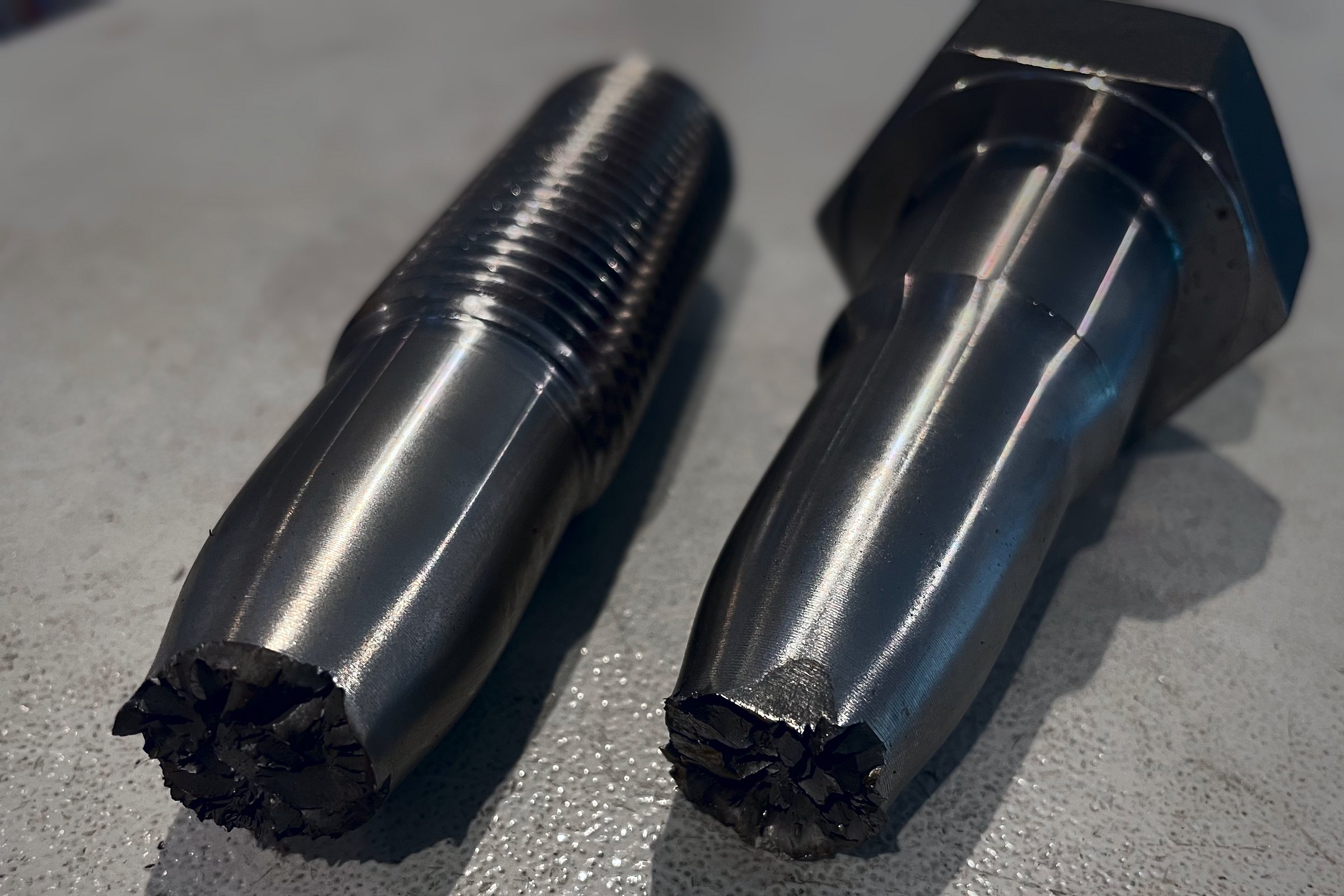
During acid pickling and zinc electroplating, hydrogen is generated at the workpiece surface, and some of it migrates as atoms into the steel lattice. The higher the strength and hardness of the steel, the more sensitive its microstructure is to this hydrogen. Under the tensile stress of the preloaded bolt, the hydrogen migrates to areas of multiaxial stress and reduces the local cohesive strength of the material there. The fracture looks brittle, often with a smooth fracture surface and hardly any necking, and occurs with a time delay.
Which rules apply?
ISO 4042 for electroplated coatings on fasteners points out that for property classes from 10.9 and hardnesses from approximately 320 HV, the risk cannot be completely ruled out, not even by heat treatment after coating. ISO 15330 describes the test procedure for detecting hydrogen embrittlement: the bolt is preloaded and observed over a specified period. Every RS Randack quotation therefore contains the clause that zinc electroplating of high-strength parts is only carried out at the purchaser’s request and risk.
How RS Randack prevents it
- Choice of coating: For parts from 10.9, we recommend zinc flake systems. They are applied and cured without an electrolytic process, the risk of hydrogen absorption is significantly lower, and corrosion protection is high. Alternatives include anti-friction coatings over manganese phosphate or mechanical zinc plating.
- Baking: If parts have to be electroplated, de-embrittlement baking at around 200 °C for several hours follows immediately after coating, so that the hydrogen diffuses out before the coating traps it. Baking is carried out by the coating partner as specified by RS Randack.
- No chemical cleaning before coating: Pickling is avoided for high-strength parts; this requirement is stated on the works order and on the purchase order to the partner.
- Threads and transitions free of notches: Rolled threads and radii at transitions reduce the stress peaks at which hydrogen acts.
- Testing: Hardness testing and, where necessary, testing to ISO 15330; checks of coating thickness, cross-section and thread gauging in our own laboratory.
How to recognise a hydrogen-induced fracture
The fracture usually lies in the first engaged thread or at the head-to-shank transition; the fracture surface is smooth and granular, without the plastic deformation of an overload fracture, and it occurs with a delay after assembly, not during tightening. Conclusive proof is obtained from a micrograph and fractography under the microscope; the RS Randack materials laboratory also carries out failure analysis of such cases as a service.
What to specify in your enquiry
- Property class and application (static, dynamic, temperature)
- Required corrosion protection: salt spray resistance in hours, coefficient of friction, colour
- Approval of zinc flake or another hydrogen-free coating for 10.9 and above
- Testing to ISO 15330, if required
Frequently asked questions
Questions and answers about hydrogen embrittlement
May 10.9 bolts be zinc electroplated?
It is possible, but with a residual risk that even baking does not completely eliminate. ISO 4042 points this out. RS Randack only does it at the purchaser’s express request and risk, and recommends zinc flake systems.
What is baking after zinc plating?
A heat treatment at around 200 °C directly after coating, during which the hydrogen absorbed in the coating process diffuses out of the steel. It must start within a few hours of coating.
Which coating is safe for 12.9?
Zinc flake systems, anti-friction coatings over a phosphate base or mechanically applied coatings, because significantly less hydrogen enters the steel with these. The choice depends on corrosion protection, coefficient of friction and service temperature.
Enquire about coated high-strength bolts to drawing
Urgent? You will hear from us within a few hours.