
Knowledge base
Manganese phosphating to ISO 9717
The base layer for high pressure, anti-friction coatings and oiled storage
Term explained
The base layer for high pressure, anti-friction coatings and oiled storage
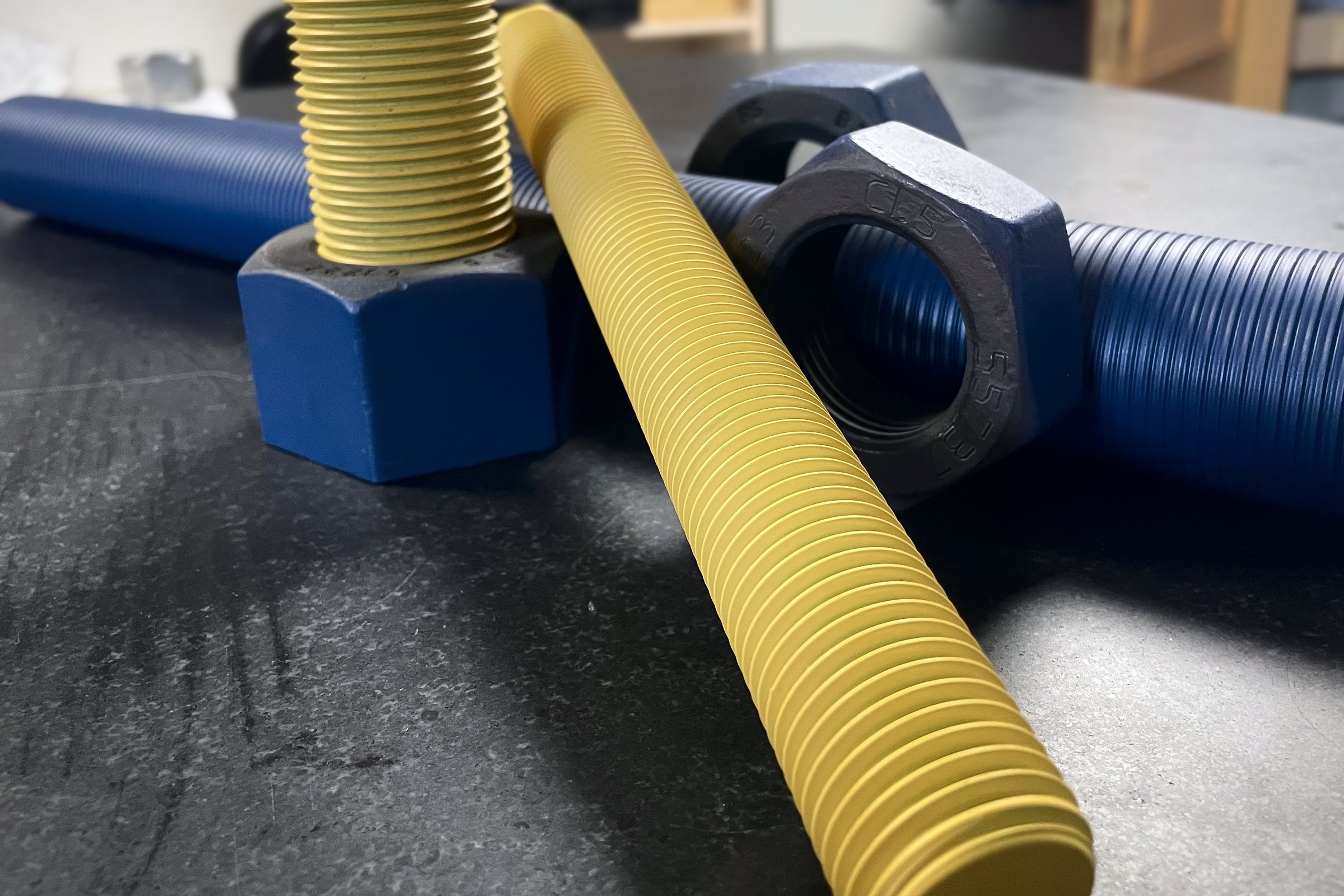
In phosphating, an acid bath converts the steel surface into a crystalline phosphate layer; it is firmly bonded to the base material, dark grey to black, microporous and around 5 to 15 µm thick. Manganese phosphate produces a dense, wear-resistant layer with high oil absorption, while zinc phosphate produces a finer layer that serves as a key for paints and coatings. ISO 9717 describes the coatings; a designation such as Fe/Mnph/r/10µm/T4 means manganese phosphate on steel, coating thickness 10 µm, post-treated with oil or wax.
What phosphating is used for
- Lubricating and running-in layer: The porous layer retains oil and prevents galling during initial tightening; for stud bolts, reduced-shank bolts and threaded studs in high-pressure and high-temperature plants.
- Base layer for PTFE: Manganese phosphate is the prescribed first layer under fluoropolymer anti-friction coatings; the combination protects against corrosion and lowers the friction coefficient, typically for flanged joints in the chemical industry, refineries and offshore.
- Temporary corrosion protection: Oiled phosphated parts withstand storage and transport without flash rust; the coating remains thin and within gauge.
- High-strength parts: With correct process control, phosphating introduces less hydrogen than electroplating processes; for 10.9 and 12.9, the risk is assessed according to the specification, with baking if necessary.
How RS Randack manages the chain
Production and marking in-house, then phosphating at the first partner and, if required, anti-friction coating at the second; the parts go directly from one to the other and come back finished. Threads are rolled so that they are within gauge with both layers. On return, RS Randack checks appearance, free running and coating thickness; on request, the partner’s coating certificate is enclosed with the inspection certificate. For parts for pressure equipment and 3.2 third-party inspections, the coating is applied in compliance with the specification, as required by the customer.
What you should specify
Designation to ISO 9717 with coating thickness and post-treatment, whether an anti-friction coating follows, property class and material, whether nuts are to be coated as well, certificate type.
Enquire about phosphated stud bolts and bolts
Urgent? You will hear from us within a few hours.