Knowledge base
Material verification and batch traceability
Why the heat remains traceable right through to the certificate
Term explained
Why the heat remains traceable right through to the certificate
Batch traceability means that, for every bolt supplied, it can be demonstrated which heat from which steel mill it came from, what values were measured for that heat and which production steps the part has gone through. Material verification is the check at goods receipt and in production that no material from another batch or of another grade gets into a lot. For special fasteners subject to third-party inspection for pressure equipment, nuclear technology, shipbuilding or rail, both are non-negotiable: a 3.1 or 3.2 inspection certificate is only as good as the chain that links it to the part.
Why material mix-ups are the greatest risk with special parts
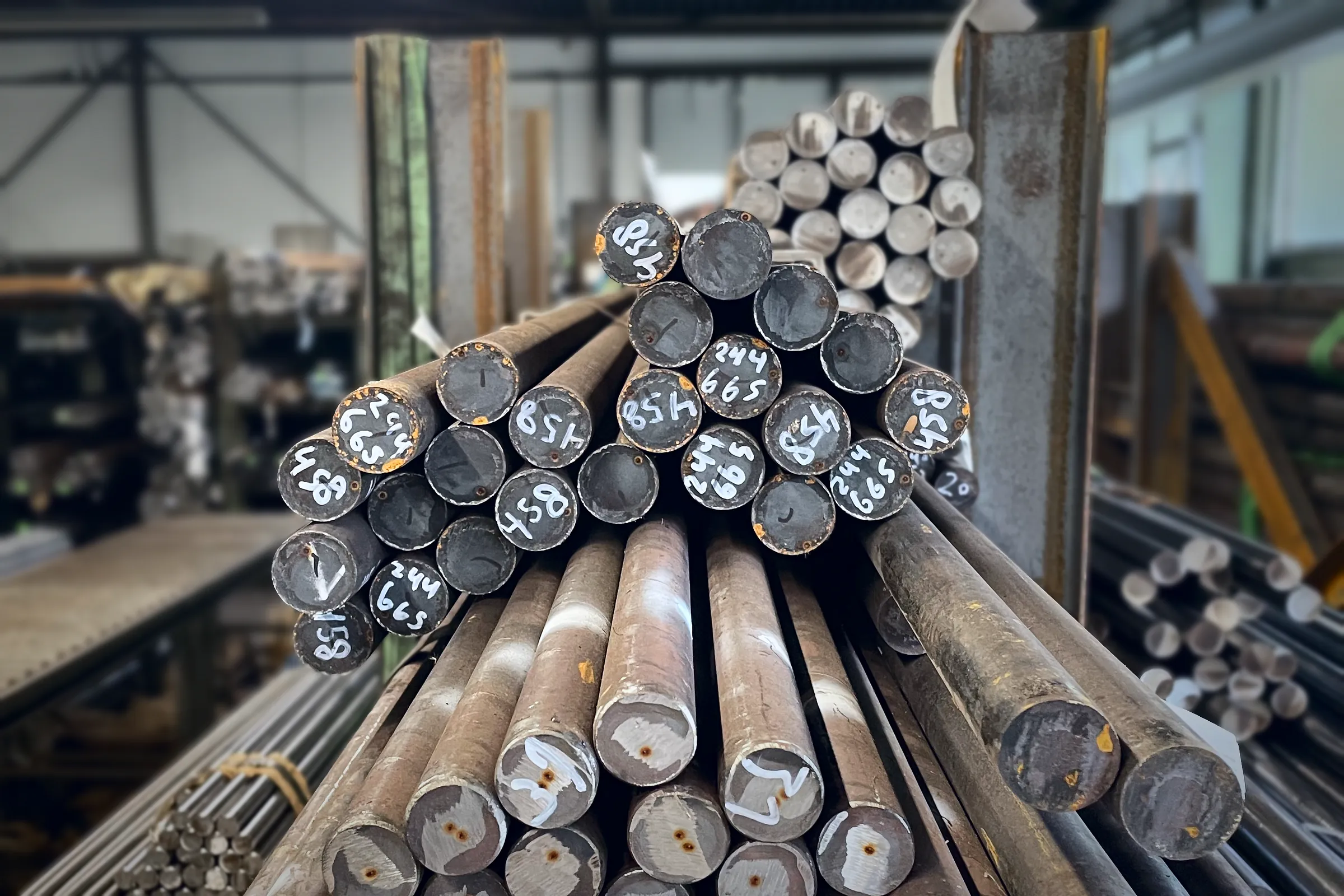
Two bars of the same diameter can come from different heats or be made of different materials; from the outside, they cannot be told apart. If a part is made from the wrong bar, its strength, toughness or corrosion resistance will not match the certificate, and the joint may fail in service. That is why quality assurance at RS Randack begins not in the laboratory but at goods receipt.
How goods receipt works at RS Randack
- Documents and identity: Delivery note against purchase order, mill certificate against the specification ordered, dimensions and surface for each bundle. The material remains blocked until inspection is complete.
- Radioactivity check on every delivery of bar stock.
- Marking: Each bundle is given a material tag with heat and batch number, at least three bars per bundle are labelled with the heat number, and the ends of all bars are colour-marked. Identical diameters from different batches are never stored in the same rack compartment.
- Material verification (PMI): If a delivery consists of more than one bundle, at least three bars per bundle are checked against a reference bar using the spark spectrometer. For material supplied quenched and tempered, hardness testing is added; a product analysis is carried out at the customer’s request.
- European raw material from approved mills, with a mill certificate for each heat.
How the batch moves through production
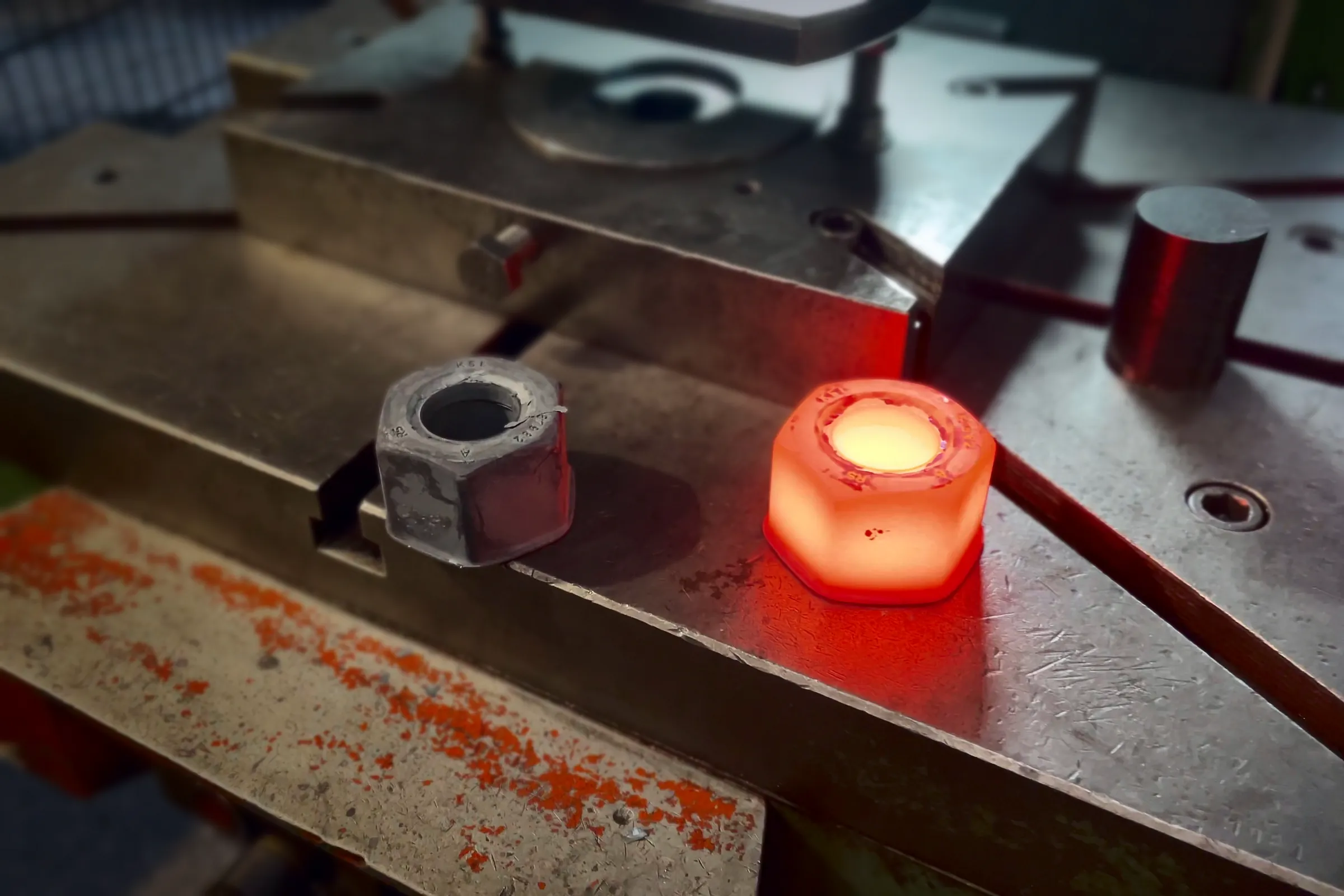
The works order states the material, the heat and the material tag number. Parts may only be made from the material specified there; before cutting, the sawyer checks the bar against the tag. A companion test bar from the same heat accompanies every lot, marked on its end face with the last digits of the order number. It passes through forging, heat treatment and machining together with the parts; after quenching and tempering, it is tested by the materials laboratory. The parts themselves carry the RS manufacturer’s mark, the material and the order or batch identification, impressed during forging or stamped after machining. Austenitic steels are processed in dedicated containers, with a fresh saw blade and new coolant, so that no foreign iron is embedded in the surface.
What happens if something does get mixed up?
Then the laboratory sorts the parts. Spectrometric analysis can assign each part to its heat because the chemical composition is characteristic of each heat. It is better not to let it come to that: at RS Randack, different batches never go into the same container, not even during shipping.
What to specify in your enquiry
- Requirement for “single heat per lot” or “single batch per line item”, if your specification calls for it
- Certificate type and whether the mill certificate from the steel mill should also be supplied
- Marking of the parts: manufacturer’s mark, material, batch, customer marking, stamped or laser-marked
- Product analysis or PMI on the finished part, if required
Frequently asked questions
Questions and answers about material verification and batch traceability
Can I trace an RS Randack bolt back to the heat?
Yes. The marking on the part leads to the works order, the material tag and the mill certificate for the heat. The records are kept for ten years.
What is a heat, and what is a batch?
A heat is the quantity of steel produced by the steel mill in one melting operation; it has a uniform chemical composition and a heat number. A batch is the production quantity that goes through heat treatment and testing together at RS Randack. Both are stated on the certificate.
Does RS Randack check every bar with the spectrometer?
Material verification is always carried out when a delivery consists of more than one bundle, on at least three bars per bundle against a reference. A full product analysis of every bar or every part is carried out at the customer’s request.
Enquire about parts made to drawing with complete batch documentation
Urgent? You will hear from us within a few hours.