
Knowledge base
Thread rolling or thread cutting
Two ways to make a thread, and when each is the right one
Term explained
Two ways to make a thread, and when each is the right one
Thread rolling is a chipless process: profiled dies cold-form the thread into the shank, displacing and work-hardening the material. Thread cutting is a machining process: a tool removes material and in doing so cuts through the grain flow. At RS Randack, almost all external threads on screws, bolts and studs are rolled; threads are only cut if the drawing expressly requires it or the thread cannot be rolled. Internal threads in nuts, on the other hand, are always machined: at RS Randack, they are tapped or turned, typically up to M80, larger sizes on request.
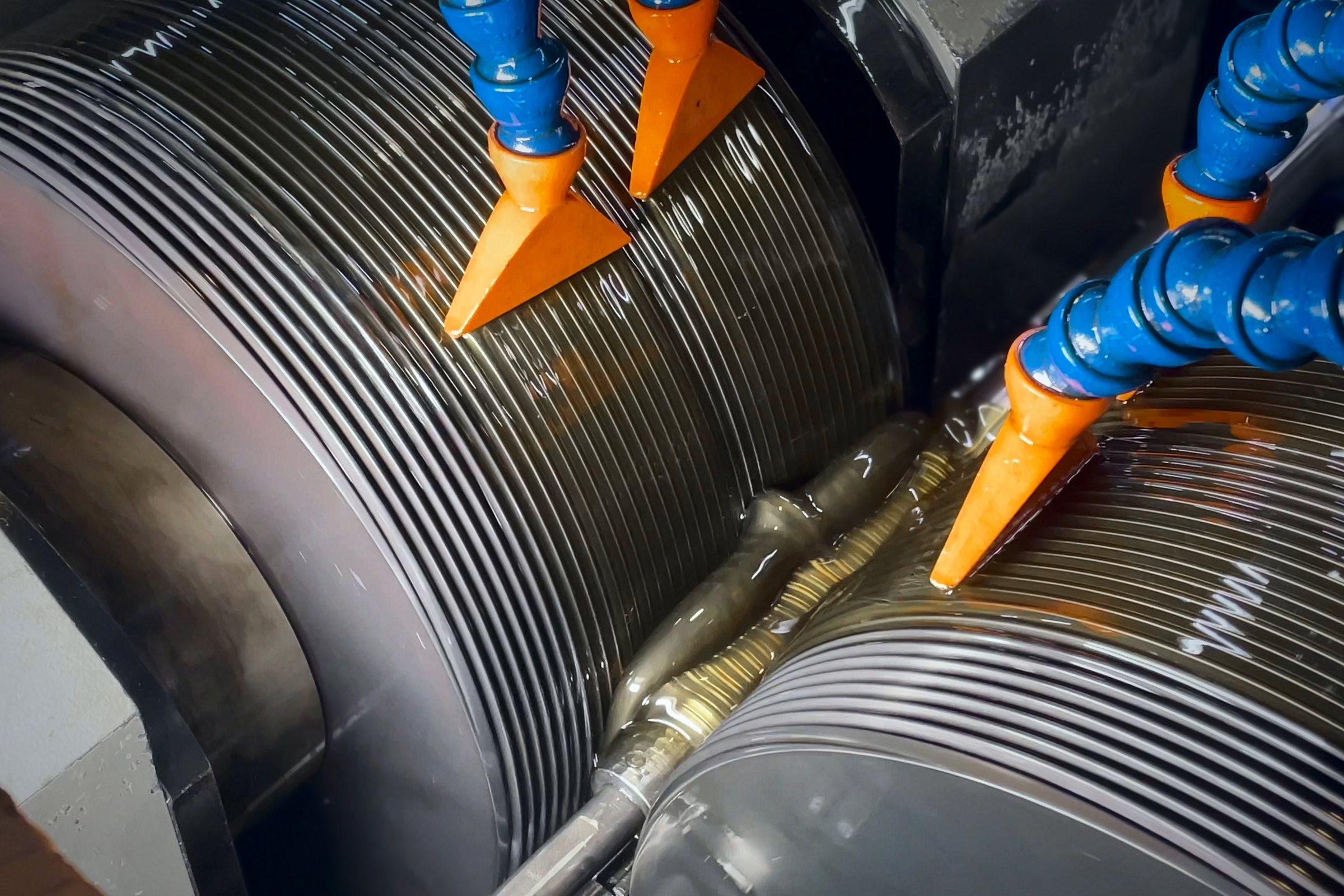
What happens during thread rolling?
The bolt is turned to the blank diameter, which roughly corresponds to the pitch diameter of the finished thread. Between two thread rolling dies, the material is then pressed into the thread flanks: the thread root is formed by indentation, the crest by material flowing upwards. No chips are produced. Long threads are produced by through-feed rolling, in which the workpiece travels axially between the dies, short threads by in-feed rolling in a single stroke. Both processes and the procedure for each thread size are described on the Thread rolling page.
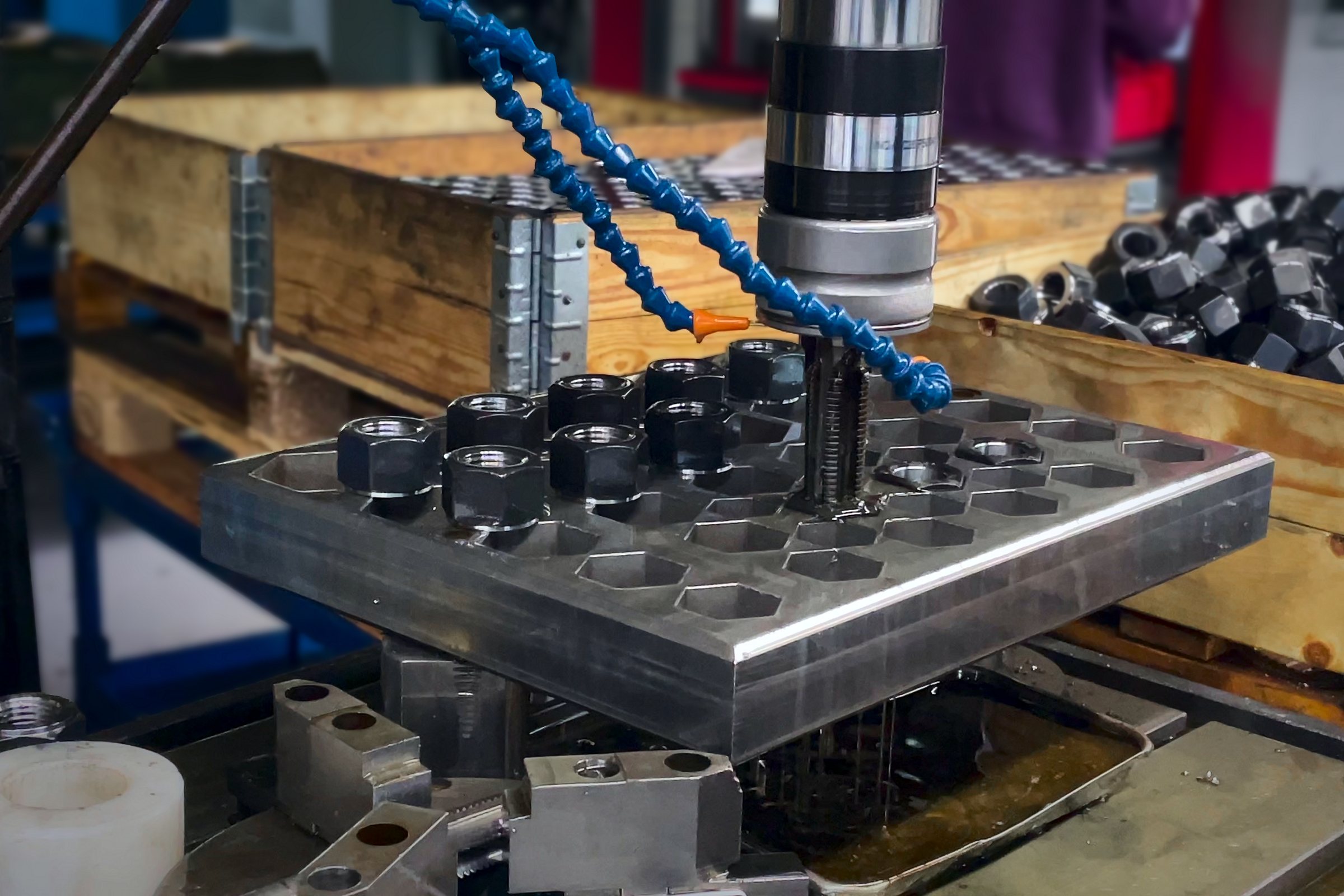
What happens during thread cutting?
In thread turning on a CNC lathe, or in cutting with a threading die and tap, the profile is cut from the material chip by chip. The grain flow of the material is severed, and the thread root is left with machining marks. The process is flexible: any profile, pitch and diameter can be produced on a lathe without dedicated rolling dies.
Why is a rolled thread stronger?
Three reasons, all of which act in the thread root, where the fatigue crack starts under dynamic loading:
- Grain flow: The grain follows the thread profile instead of being cut through.
- Work hardening: The displaced material in the thread root and on the flanks is compacted and harder.
- Compressive residual stresses: Compressive stresses remain in the thread root and partly offset the tensile stresses from the service load.
In addition, the flank surface is smooth and burnished. For joints under alternating load, the rolled thread is therefore the standard: turbines, couplings, pumps, compressors, pressure equipment, shipbuilding. If the thread is only rolled after quenching and tempering, the work hardening and residual stresses are fully retained; this final rolling is the gold standard for highly stressed bolts.
When is a thread cut anyway?
- When the drawing expressly specifies a cut or turned thread.
- For profiles or pitches where rolling dies are not economical, for example one-off parts with a special profile.
- When material, strength and thread size together exceed the rolling force that the dies can apply.
- For internal threads: nuts are drilled and tapped; RS Randack hot-pierces large special nuts beforehand so that the grain flow in the nut body is retained.
Thread rolling and thread cutting compared
- Surface: rolled, smooth and compacted; cut, with machining marks
- Fatigue strength: rolled, significantly higher, especially when rolled after heat treatment; cut, the baseline
- Dimensional accuracy: rolled, very consistent across the lot because the dies define the profile; cut, dependent on tool wear
- Time per thread: rolled, seconds; turned, minutes
- Flexibility: cut, any profile without a rolling die; rolled, dies required for each thread type and pitch
- Materials: both for quenched and tempered steels, creep-resistant and stainless steels, duplex, nickel-based alloys and titanium; for rolling, formability in the quenched and tempered condition is decisive
How is the thread inspected?
At RS Randack, the first parts of each lot are checked with a ring gauge or the mating nut and measured at the pitch diameter, followed by sample checks during the run. Threads in property class 12.9 are also inspected for laps to ISO 6157-3 under magnification. Parts that will be coated later are rolled to the lower tolerance limit so that the gauge still fits after coating.
Frequently asked questions
Questions and answers about thread rolling or thread cutting
Are “Gewinderollen” and “Gewindewalzen” the same thing?
Yes. Both German terms mean thread rolling, the chipless cold forming of a thread between dies. German standards and drawings usually say “gerollt” (rolled), while everyday usage often says “gewalzt”.
What is the maximum thread size RS Randack can roll?
Typically up to M180, larger threads on request. There is no fixed limit because the feasible size depends on a combination of rolling force per unit area, thread length, material, strength, rolling technology and thread form.
Are inch threads and American threads also rolled?
Yes: UN, UNC, UNF and UNR, as well as threads on stud bolts in grades such as B7, L7 or B16. See American threads UN, UNC and UNR for more.
Enquire about threads to drawing
Urgent? You will hear from us within a few hours.