Knowledge base
Stress-relief annealing, normalising, soft annealing
Three annealing processes, what they do and when they make sense for bolts and turned parts
Term explained
Three annealing processes, what they do and when they make sense for bolts and turned parts
Annealing is the slow heating, holding and cooling of a steel to change its microstructure or stress state without hardening it. Three processes are relevant for bolts, nuts and turned parts.
Stress-relief annealing
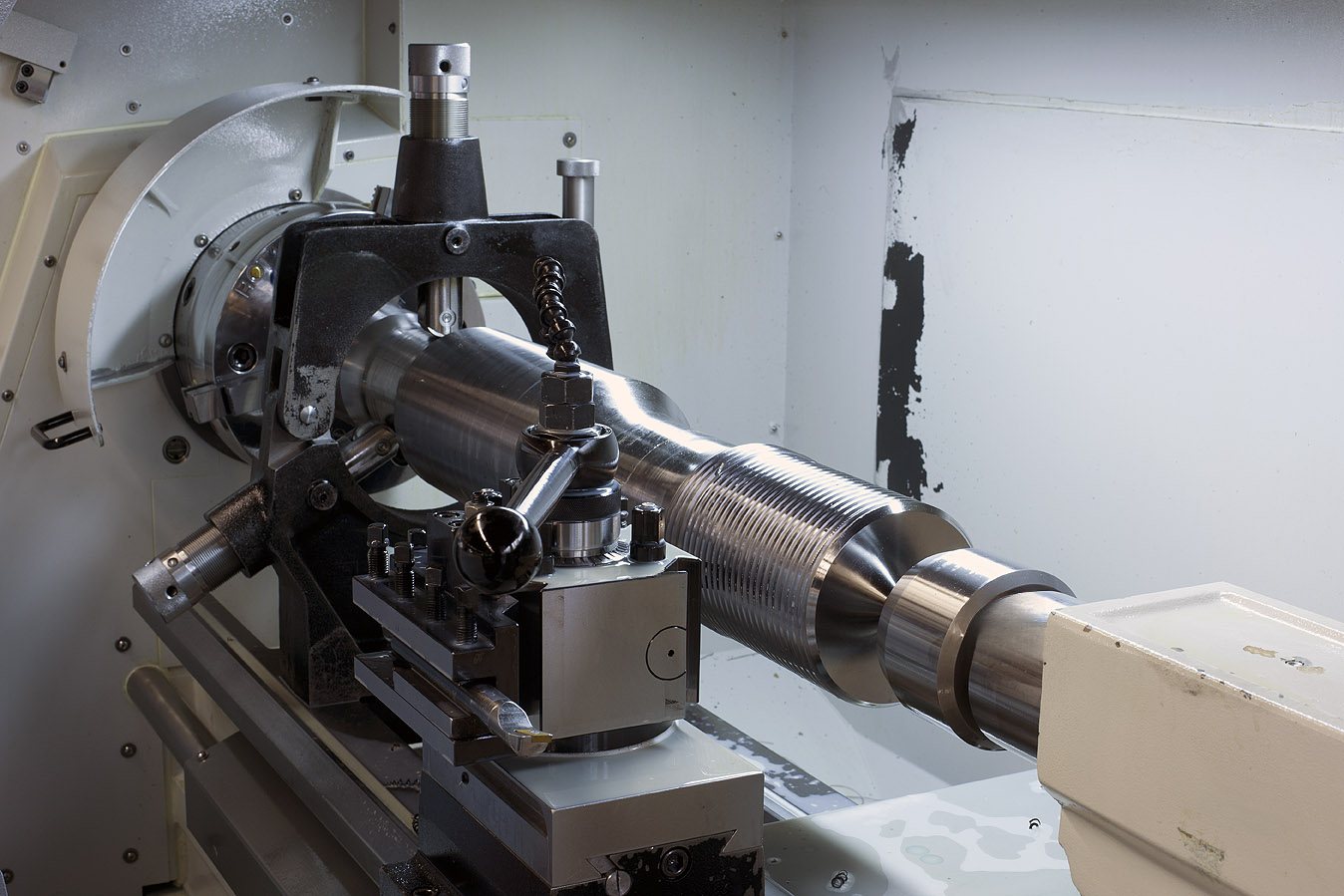
Forging, machining, straightening or welding leave residual stresses in the part. In stress-relief annealing, the steel is heated to about 550 to 650 °C, below the transformation temperature, and cooled slowly; the stresses are relieved while the microstructure remains unchanged. It makes sense for long, slender turned parts that would otherwise distort during finish machining, for welded assemblies and for parts that are subsequently nitrided or coated. Important: once a thread has been final-rolled after quenching and tempering, it must not be stress-relieved, otherwise the compressive residual stresses that give it its fatigue strength are lost. The sequence in the works order is decisive.
Normalising
Heating above the transformation temperature and cooling in air produces a fine, uniform microstructure. Forged blanks of non-alloy and low-alloy steel are normalised if no quenching and tempering follows or if the forging microstructure is to be homogenised before quenching and tempering; delivery condition +N on the certificate.
Soft annealing
Heating to just below or around the transformation temperature, followed by very slow cooling, makes the steel soft and easy to machine. It is chosen when material delivered in the quenched and tempered condition or forged material is too hard for machining, and it is the usual delivery condition +A for tool steels and high-alloy steels.
How annealing is handled at RS Randack
Immediately after forging, parts are cooled under controlled conditions or annealed, depending on the material; annealing treatments with holding times are carried out by partners or, for small parts, in-house. Production planning decides which treatment comes at which point in the sequence, taking into account distortion, machinability and subsequent final rolling; the treatment is stated on the certificate.
What you should specify
Required delivery condition, heat treatment specification, tolerances that leave no room for distortion, and whether the thread is to be rolled after heat treatment.
Enquire about parts to drawing with a defined heat treatment
Urgent? You will hear from us within a few hours.