
Knowledge base
Grinding: fits and surfaces to within hundredths of a millimetre
When a turned part needs to be ground and what this achieves
Term explained
When a turned part needs to be ground and what this achieves
Grinding is a finishing process using a rotating grinding wheel. It follows turning and quenching and tempering, and achieves what turning alone cannot: tolerances in the hundredths of a millimetre such as k6 or js6, roughness below Ra 0.8, and roundness and cylindricity even on hardened parts. For bolts and pins, this applies above all to the fitted shanks of fitted bolts, centring collars, reduced shanks with surface finish requirements, bearing seats on pins and sealing faces.
Turning or grinding
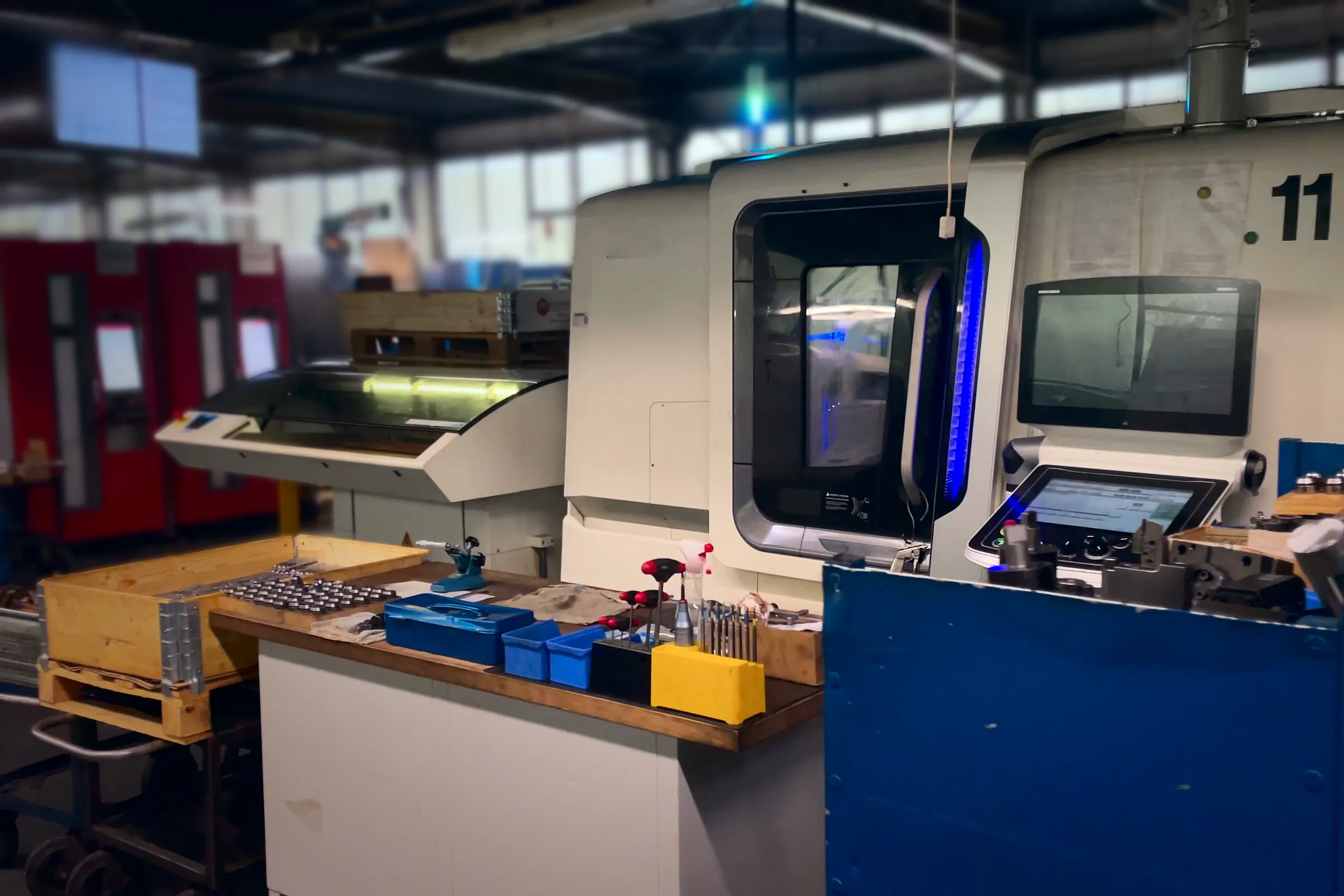
By turning, RS Randack achieves surface finishes down to Ra 1.6 and tolerances down to IT7; that is sufficient for most parts made to drawing. Grinding is necessary when the drawing calls for tighter values, when the material is too hard for finish turning after quenching and tempering, or when geometrical tolerances such as radial runout are below a few hundredths of a millimetre. Because grinding costs time and money, it is worth looking closely at the drawing: turning is often sufficient where “ground” is specified out of habit.
How RS Randack grinds
Cylindrical grinding in-house for diameters typically up to 40 mm and lengths up to 120 mm; larger parts are ground by qualified partners and inspected on their return. The grinding allowance is planned in at the turning stage, and the sequence of operations is set out in the works order: quenching and tempering, turning, grinding, then thread rolling, so that the fit and the thread are aligned with each other. Dimensions and roughness are measured and recorded on request.
What you should specify
Tolerance and roughness of the surfaces to be ground, radial runout relative to which datum axis, material and hardness, and whether a dimensional report is required.
Enquire about ground pins and fitted bolts
Urgent? You will hear from us within a few hours.