
Knowledge base
ASTM A193: grades B7, B7M, B16 and B8
The American material grades for pressure equipment and flanges
Term explained
The American material grades for pressure equipment and flanges
ASTM A193 is the American standard for bolts, studs and stud bolts in alloy and stainless steels for high-temperature and high-pressure service. It specifies the material, heat treatment, strength and testing for each grade. The grade is marked on the part as a letter and number, together with the manufacturer’s mark.
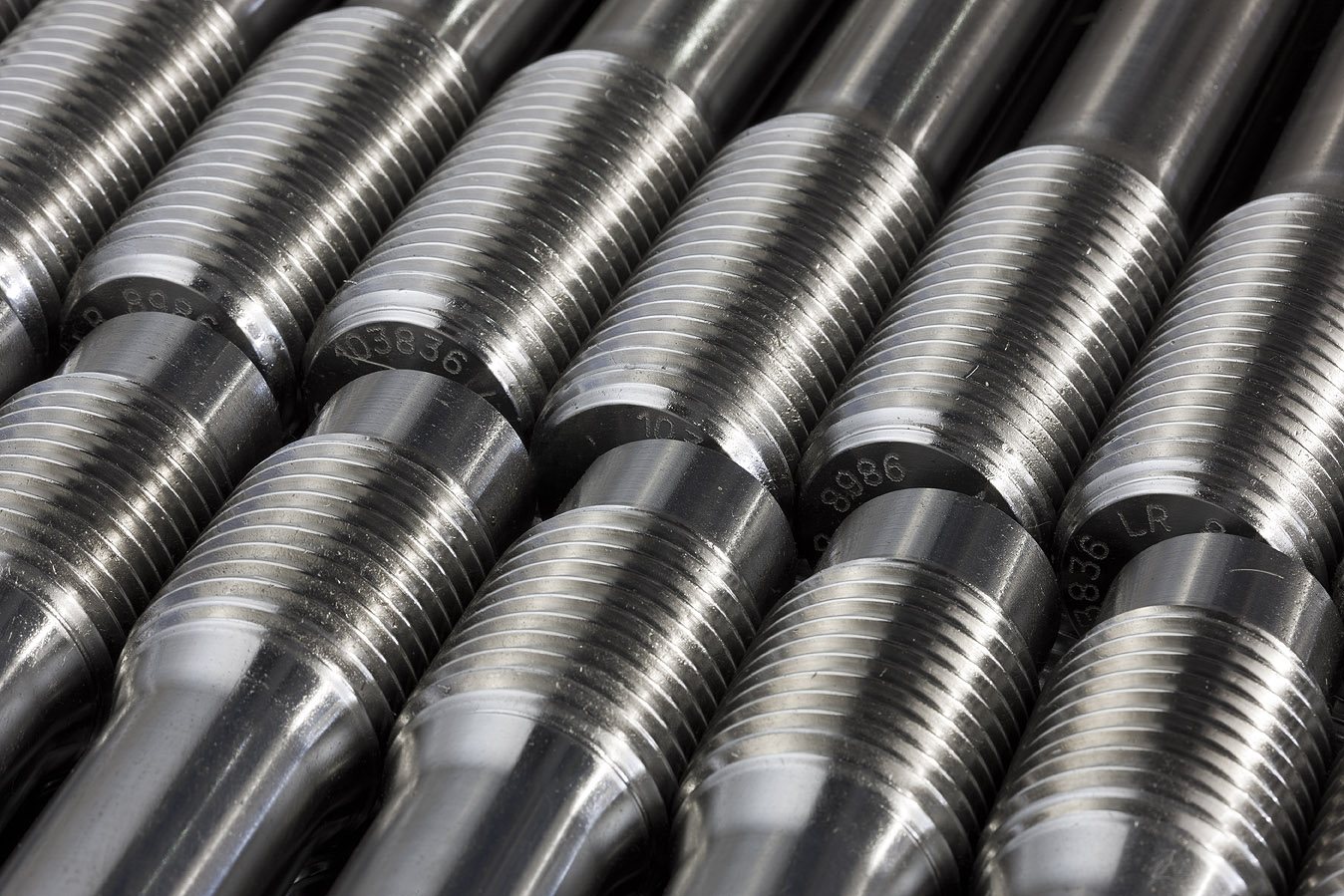
The most important grades
- B7: Chromium-molybdenum steel of the 42CrMo4 type, quenched and tempered, minimum tensile strength 125 ksi (around 860 MPa) up to 2½ inch diameter; the most requested grade for flanges and pressure equipment up to about 400 °C.
- B7M: Like B7, but with hardness limited to a maximum of 235 HB for applications involving hydrogen and sour media where brittle fracture must be avoided; lower strength.
- B16: Chromium-molybdenum-vanadium steel with higher elevated-temperature strength for temperatures above 400 °C, for example on steam turbines.
- B8 and B8M: Austenitic stainless steels (types 304 and 316), class 1 solution annealed, class 2 strain-hardened for higher strength; non-magnetic.
The matching nuts are covered by ASTM A194: grade 2H for B7, grade 7 or 4 for B7 at low temperatures, grade 8 for B8.
How RS Randack manufactures them
Made from European raw material with a mill certificate, quenched and tempered by qualified partners, with verification of tensile strength, yield strength, elongation, hardness and, on request, impact energy in our own laboratory. Threads rolled as UNC, UNF or 8UN, marking with grade and manufacturer’s mark, 3.1 or 3.2 inspection certificate. Metric parts to drawing in B7 material are also possible.
What you should specify
Grade, size with thread series and class, length, nuts to A194, coating, type of certificate.
Enquire about B7 and B16 stud bolts
Urgent? You will hear from us within a few hours.