
Knowledge base
ISO 6157: surface discontinuities on bolts and nuts
Which discontinuities are permissible, which are not, and how they are inspected
Term explained
Which discontinuities are permissible, which are not, and how they are inspected
The ISO 6157 series describes surface discontinuities on fasteners, their causes and the limits up to which they are permissible. Part 1 applies to bolts, screws and studs for general requirements, Part 2 to nuts, and Part 3 to bolts, screws and studs for special requirements, that is, for property class 12.9, for parts subject to high dynamic loads and wherever the drawing specifies it. The standard is the common yardstick when supplier and purchaser discuss a surface that looks suspicious.
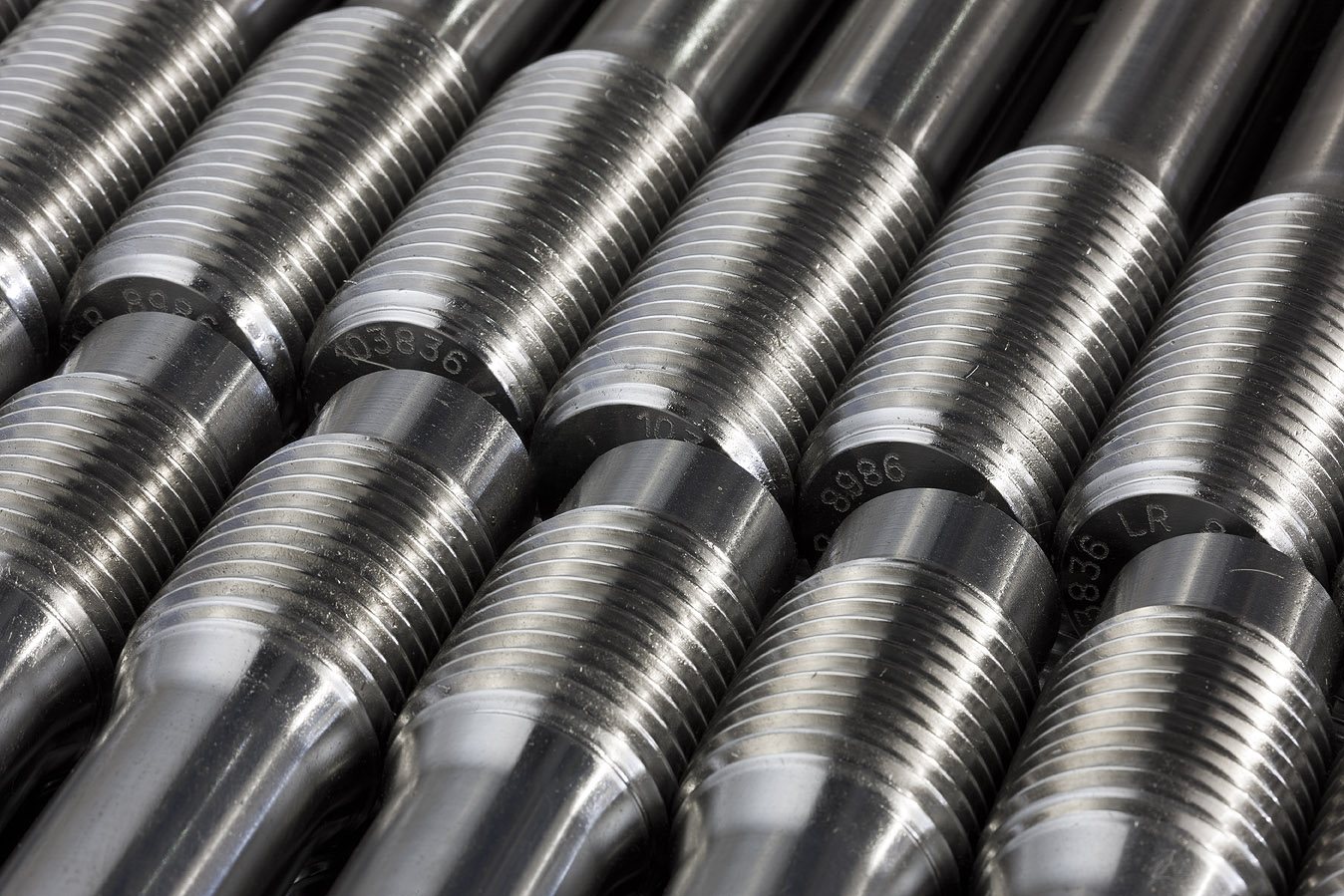
Types of discontinuity distinguished by the standard
- Cracks: Quench cracks from heat treatment, forging cracks and upsetting cracks on the head, cracks in the thread root; as a rule, they are not permissible because they grow under load.
- Laps and folds: Material folded over during forging or rolling; they are permissible within limits, but under Part 3 not in the thread or at the head-to-shank transition.
- Seams and slivers: Defects originating in the raw material, permissible within limits depending on their depth.
- Tool marks, damage, surface decarburisation: With limit values for depth and location.
How RS Randack tests
Visual inspection is part of every operation; for 12.9 and for parts to Part 3, the thread is also checked for laps under a magnifying glass. Where the drawing or the applicable rules require it, this is followed by crack testing using the magnetic particle or dye penetrant method, carried out by inspectors certified to ISO 9712, on all parts if necessary. Surface decarburisation is determined on a metallographic section in the materials laboratory. Rolled threads have the advantage here: a cut thread exposes seams in the raw material, whereas a rolled thread compacts the surface.
What you should specify
Which part of ISO 6157 applies, whether crack testing of all parts is required, and whether first articles are to be assessed with documentation of the surfaces.
Enquire about bolts with inspected surfaces
Urgent? You will hear from us within a few hours.