
Knowledge base
Dye penetrant testing (PT)
Crack testing for stainless steels, duplex, nickel-based alloys and titanium
Term explained
Crack testing for stainless steels, duplex, nickel-based alloys and titanium
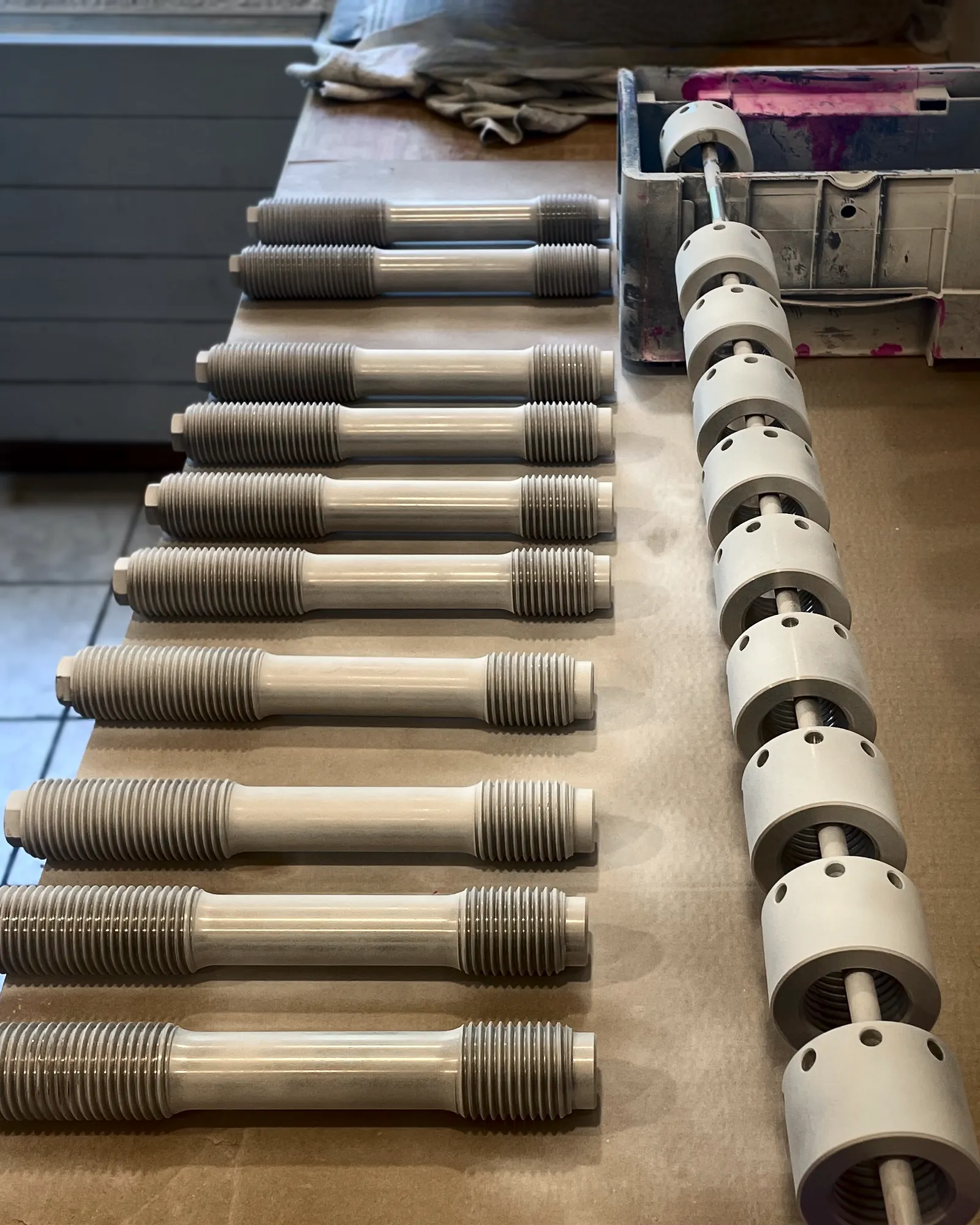
Dye penetrant testing (PT) reveals cracks and pores that are open to the surface. A red or fluorescent penetrant is applied to the cleaned surface and is drawn into the defects by capillary action. After the excess penetrant has been removed, a white developer draws the penetrant back out; the indication appears enlarged as a red line on a white background. RS Randack tests to ISO 3452-1 at room temperature in-house.
When dye penetrant testing is the right choice
Whenever the material is non-magnetic: austenitic stainless steels such as 1.4571, duplex 1.4462, nickel-based alloys, titanium and aluminium. For ferromagnetic steels, magnetic particle testing is more sensitive and faster. Both methods only reveal surface defects; internal defects are detected by ultrasonic testing.
The process at RS Randack
Cleaning, applying the penetrant, observing the dwell time, removing excess penetrant, applying the developer, evaluation to the agreed standard by inspectors certified to ISO 9712 Level 2, report. Testing is carried out after thread rolling and before any coating, on 100% of the lot for safety-critical parts and otherwise according to the inspection plan.
What you should specify
Scope of testing, test standard and acceptance criteria, special requirements such as low-halogen and low-sulphur testing products for stainless steels and nickel alloys in nuclear technology or the chemical industry, and whether the report is to be attached to the certificate.
Enquire about crack-tested stainless steel bolts
Urgent? You will hear from us within a few hours.