
Knowledge base
Coarse and fine threads
When a fine pitch is the better choice and what it demands in production
Term explained
When a fine pitch is the better choice and what it demands in production
ISO metric threads are standardised in ISO 261. The coarse thread has a fixed pitch for each nominal diameter, for example 3.5 mm for M30; anyone who writes M30 means this pitch. With a fine thread, the pitch is smaller and is stated in the designation: M30x2 or M90x6. Fine threads are available in several pitches for each diameter, and for large sizes from about M68, fine threads with a 4 or 6 mm pitch are the norm in practice, because a coarse thread would be impractically coarse at these sizes.
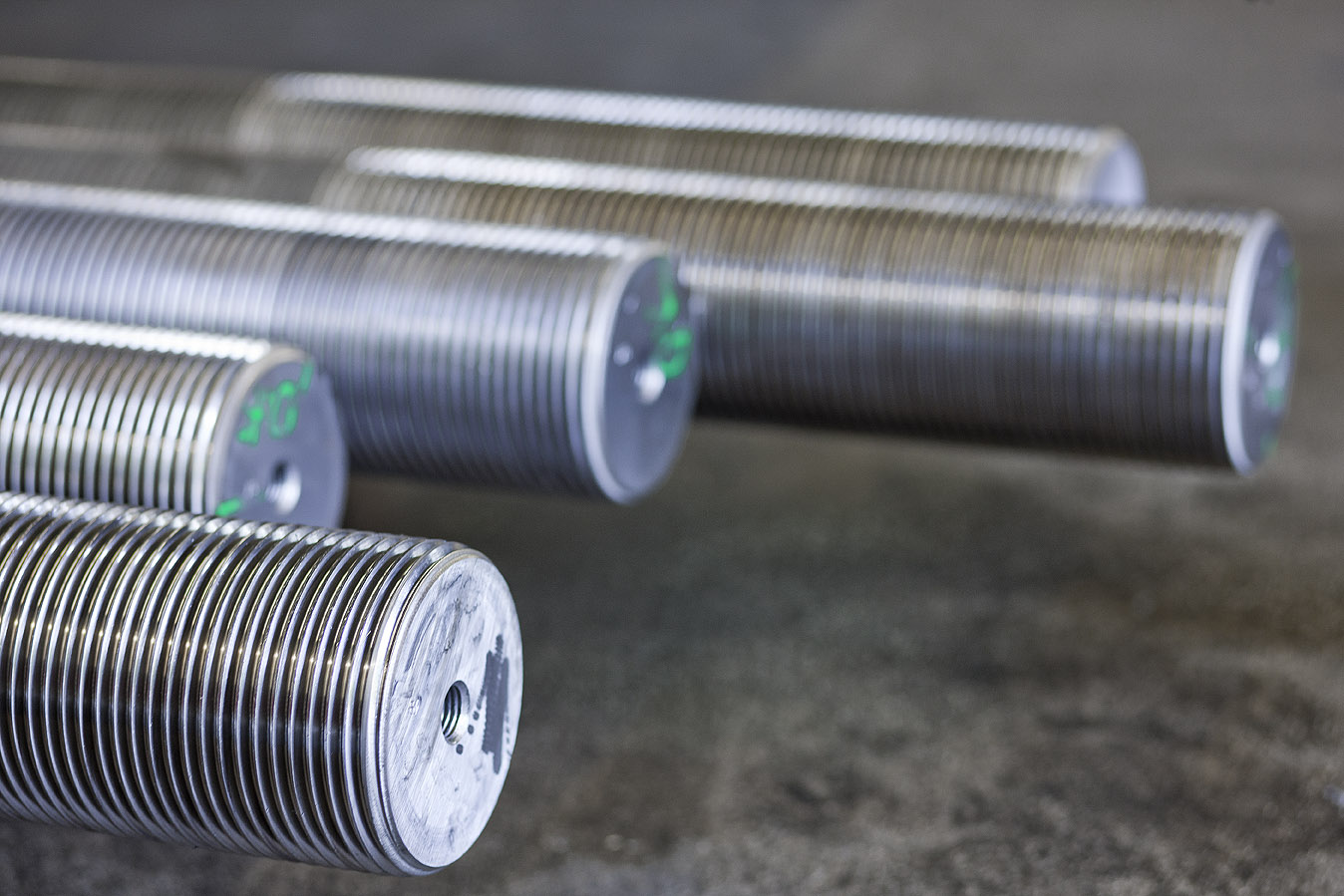
Advantages of a fine pitch
- Larger core cross-section: For the same nominal diameter, more load-bearing cross-section remains, so the bolt can transmit a higher preload.
- Greater self-locking: The smaller lead angle makes the joint less susceptible to self-loosening under vibration.
- Finer adjustment: On adjusting screws, tie rods and adjusting nuts, one turn means less travel.
- Shallower thread depth: Thin-walled parts and hollow bolts retain more wall thickness.
What you accept in return
Fine threads are more susceptible to flank damage, get dirty more easily and need more care during assembly; nuts are more likely to seize if handled roughly. That is why RS Randack packs fine threads with protective netting or air cushioning and supplies matching nuts from the same production. In corrosive environments, a coating on a fine thread must be matched particularly carefully so that the thread remains within gauge.
How RS Randack produces fine threads
Rolled, including in the quenched and tempered condition and up to 180 mm in diameter, and inspected with ring gauges and thread micrometers; the rolling dies are changed for each pitch. Internal threads for special nuts are cut to match. Every fine thread has its tolerance class: 6g is standard, and closer classes and coating allowances are possible.
What you should specify
Nominal diameter and pitch, tolerance class, thread length, whether a nut is to be supplied, coating and property class.
Enquire about special fasteners with fine threads
Urgent? You will hear from us within a few hours.