
Knowledge base
Rolling after heat treatment
Rolling threads after quenching and tempering
Term explained
Rolling threads after quenching and tempering
Final rolling means thread rolling as the last forming step after heat treatment: the thread is rolled into the already quenched and tempered shank, and no further heat treatment follows. Drawings usually state “thread rolled after quenching and tempering” or “final rolled”. RS Randack manufactures this way when the drawing requires it; for highly stressed bolts and studs, this is often the case.
What is the difference between rolling before and after heat treatment?
If the thread is rolled before quenching and tempering, the subsequent heat treatment relieves the compressive residual stresses and part of the work hardening in the thread root. With final rolling, both are retained: the thread root is compacted and under compressive stress, and this is precisely where a fatigue crack would otherwise start under cyclic loading. The result is a significantly longer fatigue life of the joint. VDI 2230 therefore distinguishes between threads rolled before and after heat treatment and assigns the higher fatigue strength to threads rolled after heat treatment. For static strength, i.e. yield strength and tensile strength, the sequence makes no difference; that comes from quenching and tempering, see property class 10.9.
When is final rolling advisable?
- For dynamically loaded joints: reduced-shank bolts to DIN 2510, bolted joints on turbines, couplings, pumps and compressors, flanged joints in pressure equipment and high-pressure plants.
- For high property classes such as 10.9 and 12.9, where the notch sensitivity of the material increases.
- Whenever the drawing or the customer specification requires it. Many parts made to drawing explicitly call for final rolling.
- For standard joints without alternating loads, rolling before quenching and tempering is usually sufficient; production planning determines the correct sequence for each material and drawing.
What final rolling requires in production
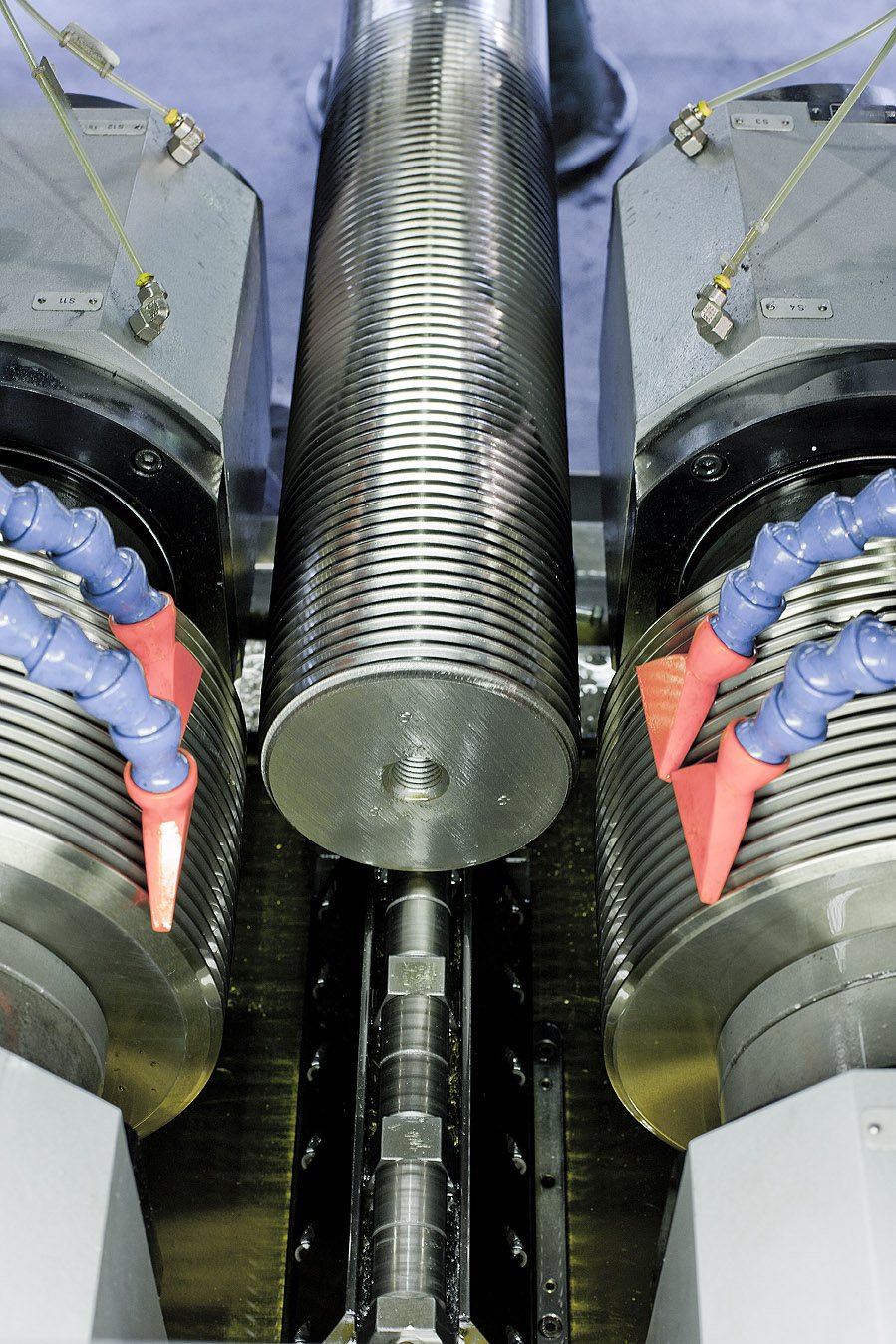
Quenched and tempered material is stronger and less formable than material in the soft condition. The rolls must therefore apply a higher rolling force, the blank diameter must be exactly right, and the rolling tools must be matched to the material and strength. The feasible thread size depends on the rolling force per unit area, thread length, material, rolling technology and thread form; at RS Randack, threads are typically possible up to M180, larger sizes on request. How the rolling process itself works is shown on the Thread rolling page.
How to recognise a thread rolled after heat treatment
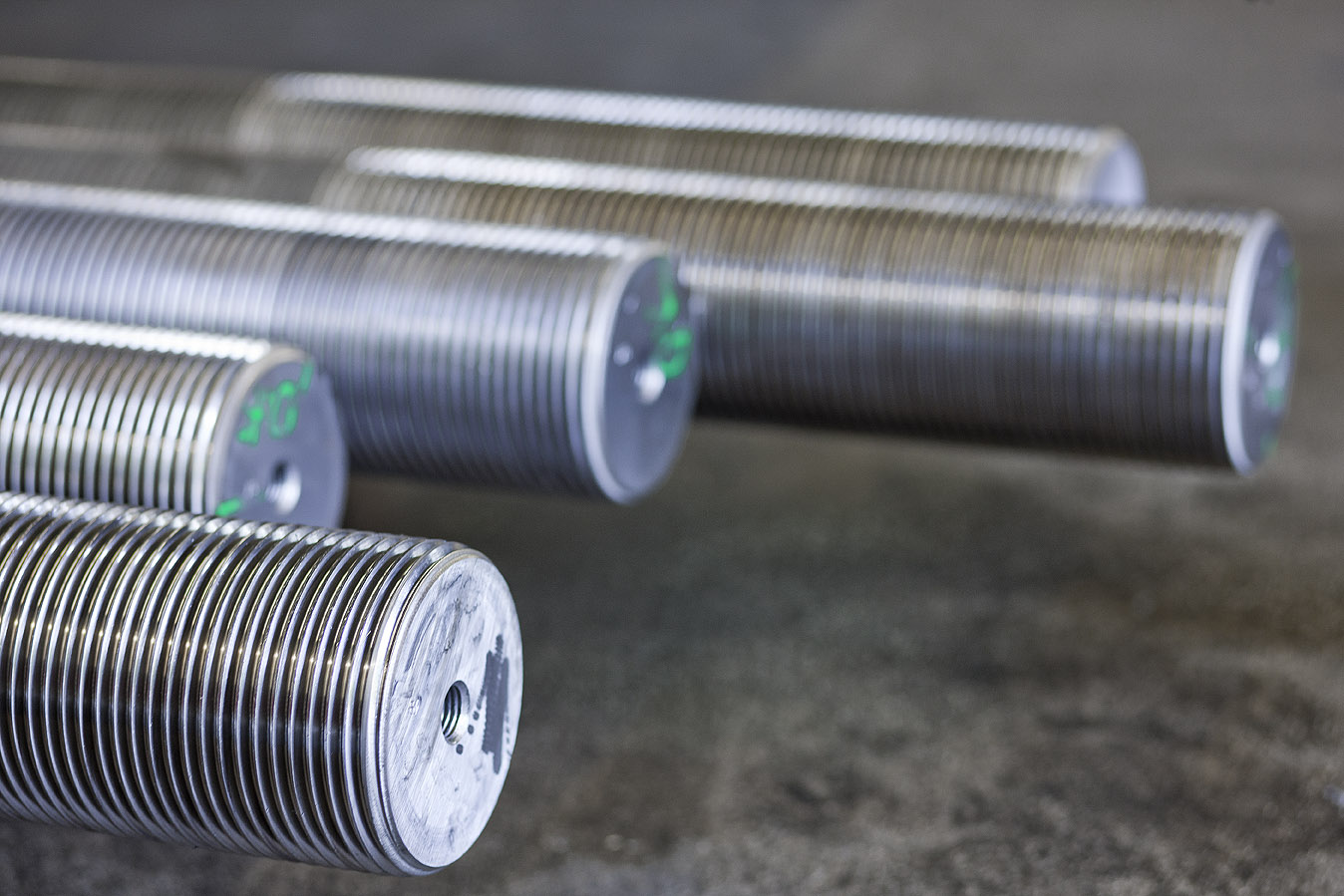
On the part itself, you can see the smooth, compacted flank and the rounded thread root without cutting marks; however, a difference from rolling before quenching and tempering cannot be reliably detected with the naked eye. Reliable proof comes from the production sequence: on the works order, thread rolling follows the hardness test of the quenched and tempered lot, and on request the production route is documented in the inspection certificate 3.1 or 3.2.
Threads that are subsequently coated
If the final-rolled part is to be zinc electroplated, coated with zinc flake or given an anti-friction coating, RS Randack rolls the thread at the lower tolerance limit so that the gauge still fits after coating. High-strength parts are baked after electroplating to prevent hydrogen embrittlement.
What to specify in your enquiry
- “Thread rolled after quenching and tempering” or “final rolled” on the drawing or in the order
- Material and property class
- Thread, thread length and tolerance class
- Certificate type (3.1 or 3.2) and, if applicable, the inspection body
- Coating, if required
Frequently asked questions
Questions and answers about final rolling
What does “final rolled” mean?
The thread was rolled into the quenched and tempered shank after heat treatment, and no further heat treatment followed. As a result, work hardening and compressive residual stresses in the thread root are fully retained.
Is a thread rolled after heat treatment stronger?
Static strength is the same; it comes from quenching and tempering. What is higher is fatigue strength under alternating loads, because the thread root is compacted and under compressive stress.
Can every thread be rolled after heat treatment?
Not always. Material, strength, thread size and thread length determine the rolling force required. RS Randack checks on the specific part whether final rolling is possible and otherwise proposes rolling before quenching and tempering.
Enquire about threads rolled after heat treatment, to your drawing
Urgent? You will hear from us within a few hours.