Knowledge base
ASTM A320: grades L7, L7M and L43 for low temperatures
Bolts with Charpy impact verification at –101 °C
Term explained
Bolts with Charpy impact verification at –101 °C
ASTM A320 is the American standard for bolts, studs and stud bolts in alloy and stainless steels for low-temperature service. In material and strength, the grades largely correspond to those of ASTM A193, but they additionally require proof of impact energy at a specified low test temperature. This ensures that the bolt remains tough even in frost, in refrigeration plants or with liquefied gases.
The grades
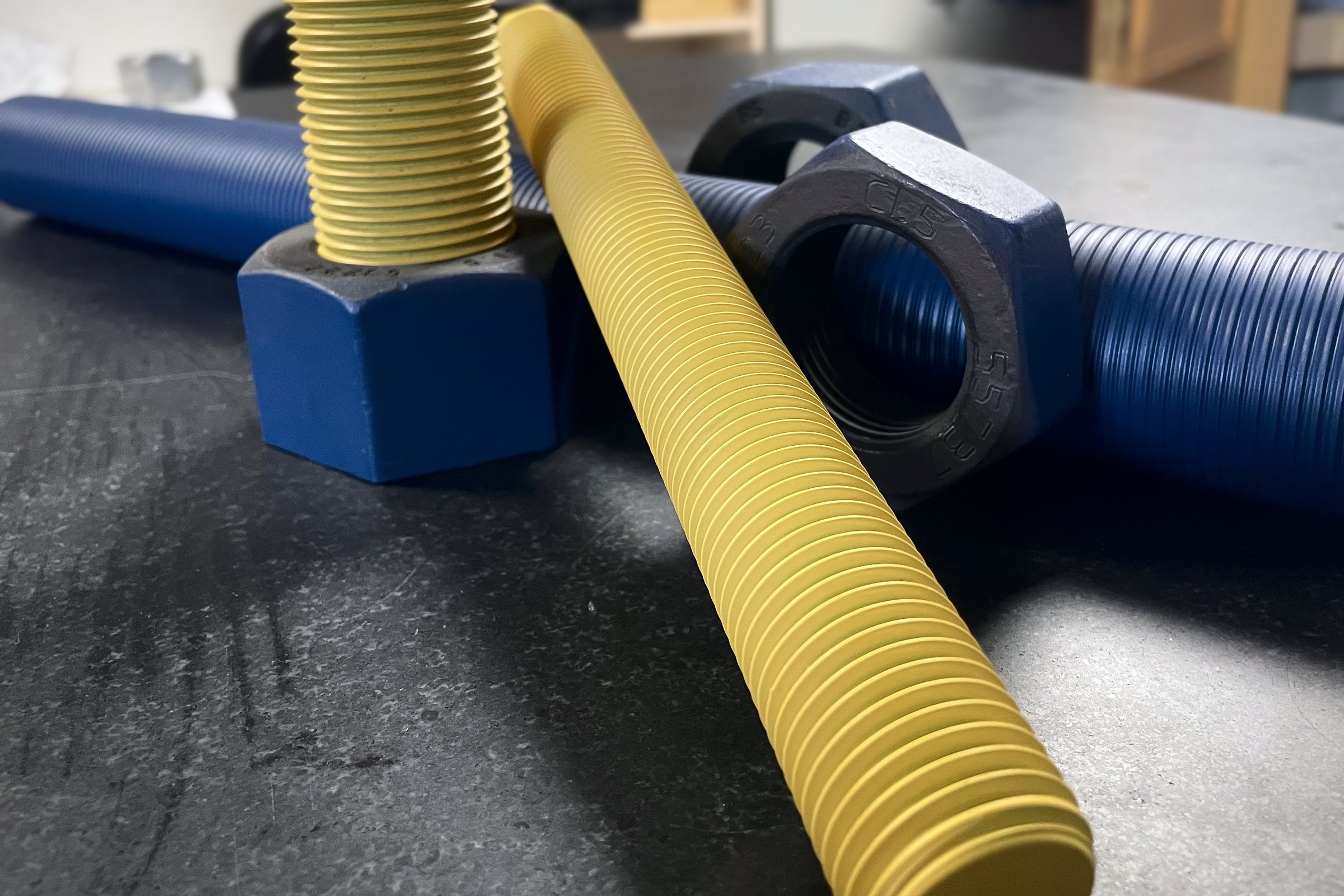
- L7: Chromium-molybdenum steel of the 42CrMo4 type, quenched and tempered, Charpy impact test at –101 °C (–150 °F), strength as for B7 up to 2½ inches.
- L7M: As L7, with hardness limited to a maximum of 235 HB for sour service.
- L43: Nickel-chromium-molybdenum steel of the 34CrNiMo6 type, with higher hardenability so that larger diameters can be quenched and tempered through to the core, and with particularly high toughness.
- B8 and B8M to A320: Austenitic steels for which the Charpy impact test at –196 °C applies.
The matching nuts are grade 4 or 7 to ASTM A194 with the corresponding low-temperature impact testing.
How RS Randack tests
Tensile test and hardness in our own laboratory, Charpy impact test down to –70 °C in our own cooling bath and at –101 °C or –196 °C through an accredited partner laboratory; the values are documented in the 3.1 or 3.2 inspection certificate. Materials containing nickel, such as 34CrNiMo6, reliably achieve the required toughness even in large diameters.
What you should specify
Grade, test temperature and required impact energy, size with thread series, length, nuts to A194, coating, certificate type.
Enquire about L7 stud bolts with low-temperature impact testing
Urgent? You will hear from us within a few hours.