Knowledge base
Reduced-shank bolts to DIN 2510
Why the slim shank makes the joint more reliable
Term explained
Why the slim shank makes the joint more reliable
A reduced-shank bolt is a bolt whose shank diameter is smaller than the minor diameter of the thread. The slim reduced shank stretches elastically under preload and acts like a spring in the joint. The DIN 2510 series of standards describes bolted joints with reduced-shank bolts, nuts, cap nuts and spacer sleeves for plant engineering. DIN 2510 is one of the standards most frequently named in enquiries to RS Randack; reduced-shank bolts are made to standard and to drawing, as bolts with heads and as studs with a reduced shank.
Why a slimmer shank makes the joint more reliable
A bolted joint holds as long as the preload is greater than the working load pulling the parts apart. A stiff bolt loses preload even with small amounts of embedding or with thermal expansion of the clamped parts. A reduced-shank bolt is more elastic: at the same preload it stretches further, so embedding, temperature changes and load peaks cost only a small part of the preload. In addition, the reduced shank cushions the working load and reduces the alternating stress in the thread. This is why reduced-shank bolts are used wherever joints must remain leak-tight and secure for years under pressure, temperature and vibration: on turbine casings, flanges of pressure equipment, couplings, compressors and pumps.
What defines a reduced-shank bolt to DIN 2510
- Reduced shank below the thread minor diameter, with smooth, radiused transitions free of notches
- Threads toleranced for assembly in the hot condition, often with spacer sleeve and cap nut from the same series of standards
- Materials according to service temperature: creep-resistant Q&T steels such as 21CrMoV5-7 (1.7709) and 40CrMoV4-6 (1.7711) to EN 10269 for temperatures up into the steam turbine range, high-temperature steels such as X22CrMoV12-1 (1.4923) above that, and Q&T steels such as 42CrMo4 (1.7225) for moderate temperatures
- Marking with manufacturer’s mark, material and batch on the end face
How RS Randack makes reduced-shank bolts
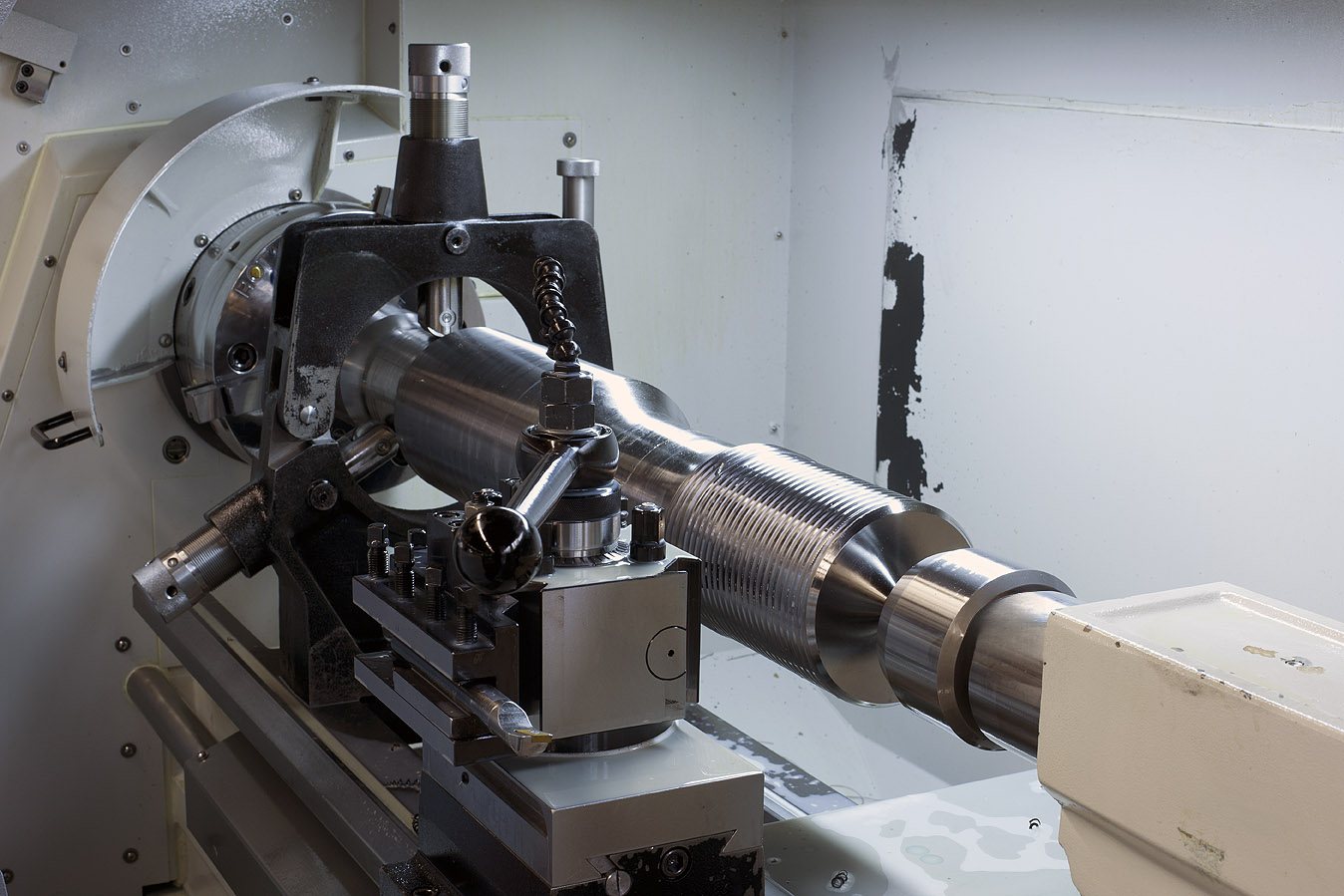
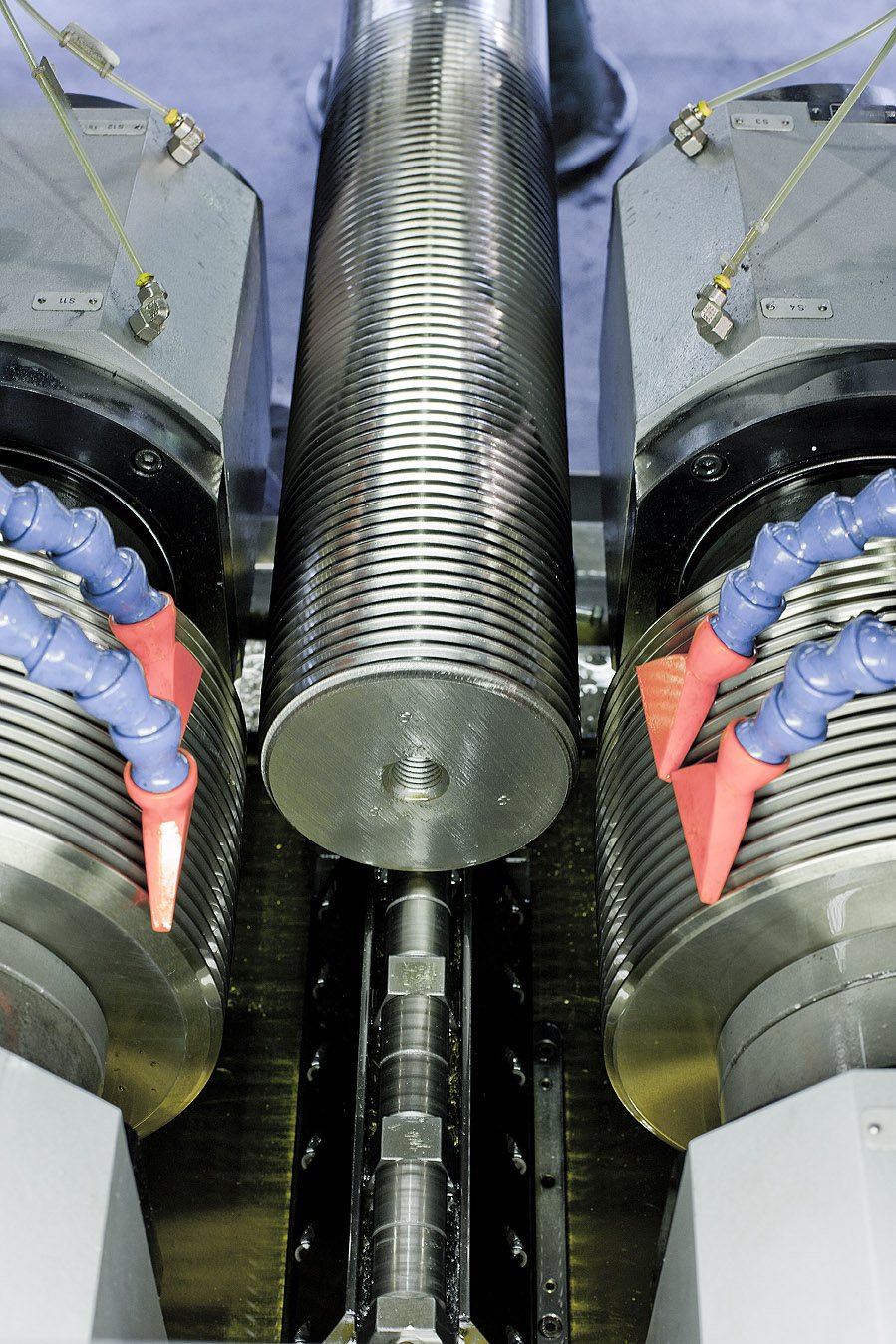
The reduced shank is turned on CNC turning centres and, on long, slender bolts, supported with a steady rest so that the shank stays round and true to size; lengths typically up to 3,500 mm, longer on request. Heads and collars are produced in our own forge with uninterrupted grain flow. The thread is rolled, and on highly stressed joints rolled after quenching and tempering, so that the work hardening and compressive residual stresses in the thread root are retained. The property class is achieved during quenching and tempering and verified in our own materials laboratory on the test bar and on the full-size bolt; on request with impact energy at test temperature and crack testing on the finished part.
What information do we need for production?
- Standard and part of DIN 2510, or your drawing with reduced-shank diameter, transition radii and thread length
- Material or service temperature, property class or minimum mechanical properties
- Thread: rolled before or after heat treatment, tolerance class
- Accessories: nuts, cap nuts and spacer sleeves from the same production
- Type of certificate (3.1 or 3.2) and, where applicable, the inspection body
- Coating or anti-friction coating for assembly at high temperatures
Frequently asked questions
Questions and answers about reduced-shank bolts to DIN 2510
What is the difference between a reduced-shank bolt and a standard bolt?
A reduced-shank bolt has a shank that is slimmer than the minor diameter of the thread. It stretches more under preload, retains the preload better during embedding and temperature changes, and absorbs alternating loads elastically.
What are reduced-shank bolts to DIN 2510 used for?
For flanged joints and casing split joints that must remain leak-tight under pressure, high temperature and vibration: steam and gas turbines, pressure equipment, compressors, pumps, couplings in power generation, chemicals and shipbuilding.
Does RS Randack also make reduced-shank bolts to drawing?
Yes. Reduced-shank bolts and studs are made to drawing in materials ranging from 42CrMo4 to high-temperature steels, with threads rolled before or after heat treatment and a 3.1 or 3.2 inspection certificate.
Enquire about reduced-shank bolts to DIN 2510 or to drawing
Urgent? You will hear from us within a few hours.